

God is in the sadness and the laughter, in the bitter and the sweet.
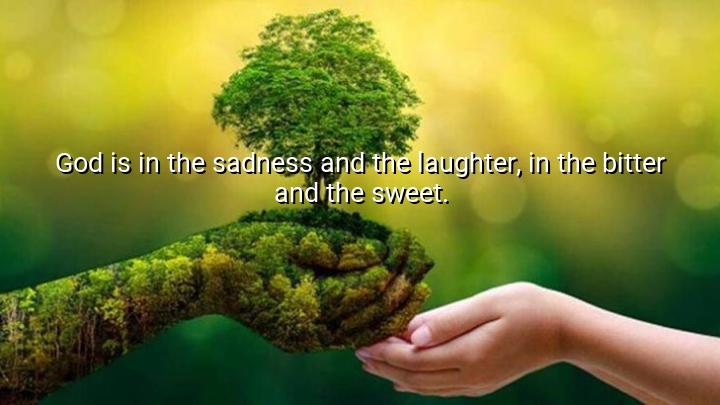




In this quote, Neale Donald Walsch, a spiritual author known for his Conversations with God series, expresses the idea that God is present in all aspects of life, both the joyful and the painful. By saying, "God is in the sadness and the laughter, in the bitter and the sweet," Walsch suggests that divine presence is not confined to moments of happiness or prosperity but is equally found in times of suffering and struggle. This perspective invites individuals to see God as encompassing the entirety of human experience, embracing both the light and dark aspects of life.
Walsch’s statement challenges the view that God is only present in moments of bliss or fulfillment. Instead, he proposes that divine presence transcends emotions and experiences, weaving through all moments—whether they are filled with sorrow or joy. This view aligns with a more holistic understanding of spirituality, where God is not just a source of comfort in happy times but also a source of strength and understanding in moments of hardship and difficulty.
The quote emphasizes the interconnectedness of all human emotions, suggesting that sadness and laughter, bitter and sweet experiences, are part of the human condition and are all opportunities for spiritual growth and insight. By acknowledging God’s presence in both sides of life’s spectrum, Walsch encourages people to find meaning and divinity in every experience, cultivating a deeper sense of faith and acceptance in both the highs and lows.
Ultimately, Walsch’s quote invites a more inclusive and resilient understanding of spirituality. It encourages individuals to recognize the divine not only in moments of celebration and happiness but also in moments of challenge, grief, and sorrow. This perspective fosters a sense of wholeness and gratitude, allowing one to find spiritual meaning in the full range of human experiences.

AAdministratorAdministrator
Welcome, honored guests. Please leave a comment, we will respond soon