

God creates out of nothing. Wonderful you say. Yes, to be sure, but he does what is still more wonderful: he makes saints out of sinners.
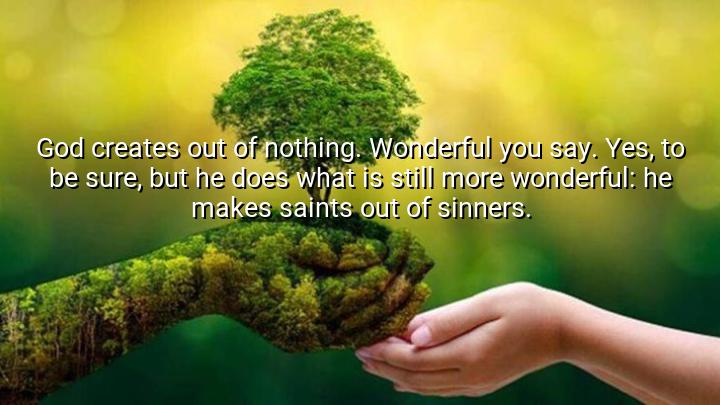




The quote "God creates out of nothing. Wonderful you say. Yes, to be sure, but he does what is still more wonderful: he makes saints out of sinners" by Søren Kierkegaard explores the transformative power of God in the lives of individuals. Kierkegaard is reflecting on the incredible nature of divine creation, highlighting that while it is miraculous that God can create the universe from nothing, an even more remarkable act is God's ability to transform flawed and sinful human beings into something holy and righteous. This speaks to the concept of grace and redemption, emphasizing that no matter how lost or fallen someone may be, God has the power to bring about profound spiritual renewal.
The origin of this quote lies in Kierkegaard’s deeply Christian and existential philosophy. As a theologian and philosopher, he often reflected on the human condition, the nature of faith, and the profound relationship between humanity and God. Kierkegaard's writing frequently focused on the paradoxes of the Christian faith, and this quote highlights one of those paradoxes: the idea that God can take the most imperfect and sinful human beings and transform them into something that reflects divine goodness and holiness.
The concept of making saints out of sinners ties into Kierkegaard’s views on grace—the idea that spiritual transformation is not earned by human effort but is a gift from God. This transformative power challenges the idea of moral perfection being a prerequisite for salvation, instead emphasizing that redemption is available to all, regardless of their past mistakes or imperfections. The quote suggests that God's love and grace are not limited to the virtuous but are offered to all who are willing to accept it, no matter how far they may have strayed.
Ultimately, Kierkegaard’s quote is a powerful reminder of the hope and possibility of spiritual renewal. It invites individuals to reflect on the depth of God’s mercy and to understand that no one is beyond redemption. The quote emphasizes that even those who see themselves as the most sinful can be transformed through God's grace into beings of great spiritual purity and holiness, showcasing the boundless nature of divine love and power.

AAdministratorAdministrator
Welcome, honored guests. Please leave a comment, we will respond soon