

Gardening is not a rational act.
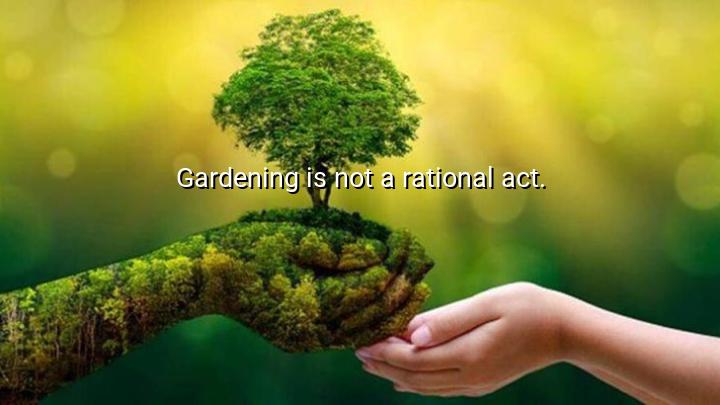




The quote "Gardening is not a rational act" by Margaret Atwood suggests that gardening, while often viewed as a practical activity, is deeply rooted in emotion, intuition, and creativity rather than strict logic or reason. Atwood implies that gardening is driven by a personal and irrational connection to the earth, plants, and nature, rather than a calculated or rational decision-making process. Gardeners may choose to plant specific flowers or cultivate certain vegetables not because it is the most efficient or logical option, but because it satisfies a deeper, emotional desire to engage with the natural world.
Atwood’s statement also reflects the idea that gardening is an inherently human act, one that involves care, love, and nurturing—qualities that often transcend rational thought. It speaks to the mystery and joy of gardening, which can be unpredictable and beyond our control. Plants do not always grow as planned, and despite the best efforts, the outcomes may differ from expectations. This inherent unpredictability makes gardening an act of faith and hope, as gardeners must trust in the process and accept the lack of absolute control over the results.
In a broader sense, this quote also challenges the idea of control and perfection in our lives. It suggests that, unlike many aspects of modern life where logic and reason govern our decisions, gardening offers a break from this structured thinking. It is an act of creativity and connection to something larger, often involving experimentation, trial, and error. Gardening is as much about the process and the relationship with nature as it is about the tangible results.
Margaret Atwood, a Canadian author known for her works such as The Handmaid’s Tale and Oryx and Crake, often explores themes of human nature, society, and connection to the environment. This quote reflects her appreciation for the irrational and emotional aspects of life, showing that some of the most meaningful experiences, like gardening, are not bound by rationality but by a deeper, more personal engagement with the world.

AAdministratorAdministrator
Welcome, honored guests. Please leave a comment, we will respond soon