

From the naturalistic point of view, all men are equal. There are only two exceptions to this rule of naturalistic equality: geniuses and idiots.
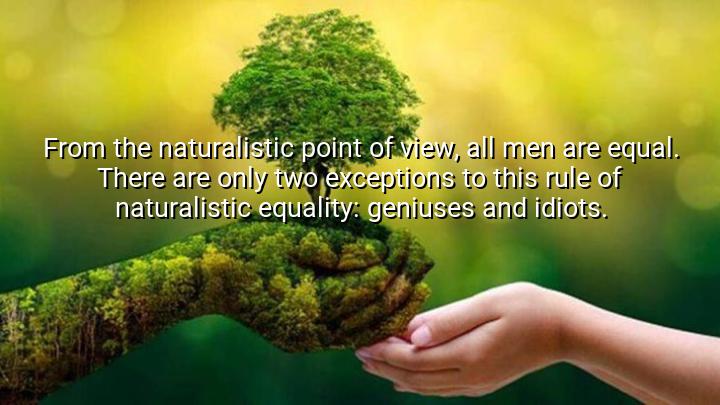




In this quote, Mikhail Bakunin, a Russian anarchist and philosopher, presents his view on equality from a naturalistic point of view. He argues that, fundamentally, all men are equal, suggesting that from a biological or natural standpoint, humans share inherent equality in terms of their humanity. However, Bakunin acknowledges two exceptions to this rule of naturalistic equality: geniuses and idiots. By making this distinction, he highlights the complexity of human nature and the idea that intellectual or mental abilities can set individuals apart, despite the inherent equality of all humans in other respects.
The distinction between geniuses and idiots reflects Bakunin’s recognition that intellectual capacity can create differences that are difficult to overlook, even within a framework of equality. He seems to be suggesting that, while people are equal in terms of their basic human rights and natural conditions, differences in intelligence or creativity can lead to people being perceived as exceptional or lacking. The concept of the genius represents someone who exceeds normal intellectual boundaries, while the idiot represents someone who falls short, both creating a divide in the otherwise equal nature of humanity.
Bakunin’s anarchist perspective on equality is critical in understanding the quote. In his broader philosophy, Bakunin was a strong advocate for liberty and equality within society, aiming to eliminate hierarchical structures that impose inequality. Yet, this quote also reveals his understanding that natural inequality exists in forms that go beyond social or political structures, such as in intellectual or cognitive differences. He acknowledges these differences while maintaining his belief in the overall equality of all humans.
Ultimately, Bakunin’s quote presents a nuanced view of equality, where, although people are equal in their basic human rights and natural existence, intellectual differences create exceptions that complicate this equality. It reflects his deeper understanding of the complexities within human society and the way nature and intellect intersect with ideals of equality and liberty.

AAdministratorAdministrator
Welcome, honored guests. Please leave a comment, we will respond soon