

For to be free is not merely to cast off one's chains, but to live in a way that respects and enhances the freedom of others.
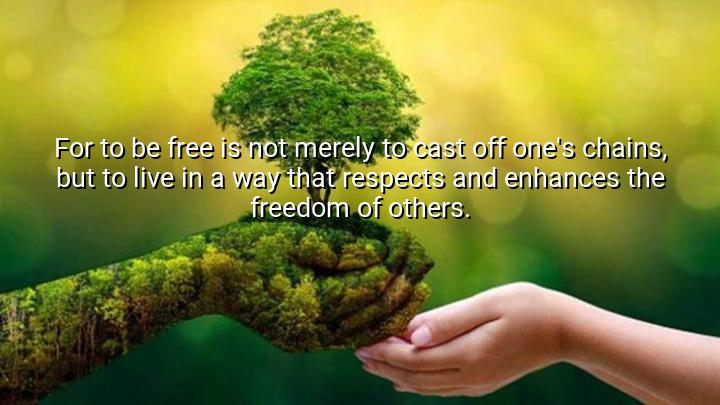




The quote "For to be free is not merely to cast off one's chains, but to live in a way that respects and enhances the freedom of others" by Nelson Mandela emphasizes a deeper, more communal understanding of freedom. Mandela is asserting that true freedom isn't just about individual liberation or breaking free from oppression. While shedding one’s personal chains may provide a sense of freedom, the true essence of freedom is realized when it is used to promote and protect the freedom of others as well.
Mandela’s perspective on freedom challenges the idea that personal liberty is an isolated achievement. He suggests that the most meaningful kind of freedom involves creating an environment where everyone can experience their own freedom, not just a select few. By living in a way that respects and uplifts others, a person contributes to a collective, inclusive vision of freedom, where equality and justice prevail. This view is rooted in Mandela’s lifelong fight against apartheid and his commitment to building a democratic, non-racial society in South Africa.
The origin of this quote can be found in Mandela’s belief in human rights, equality, and social justice. After spending decades in prison, Mandela emerged with a profound understanding of freedom that went beyond individual release. His activism was always aimed at not only securing freedom for himself but also for all people, especially the oppressed. His commitment to reconciliation and building a society that respects everyone’s rights reflects the values captured in this quote.
Ultimately, Mandela’s quote underscores the idea that freedom should not be an individualistic pursuit, but a shared goal that benefits the broader community. To be truly free, a person must live in a way that encourages the freedom of others, creating a society where freedom is respected, protected, and enhanced for all.

AAdministratorAdministrator
Welcome, honored guests. Please leave a comment, we will respond soon