

Face the facts of being what you are, for that is what changes what you are.
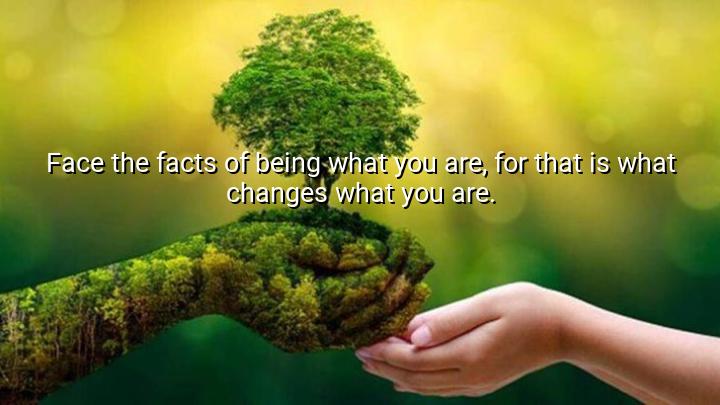




The quote “Face the facts of being what you are, for that is what changes what you are” comes from Søren Kierkegaard, a 19th-century Danish philosopher often regarded as the father of existentialism. This statement reflects one of Kierkegaard’s central ideas: the importance of self-awareness and authenticity. In his view, personal growth and transformation begin only when we honestly confront our true nature—our strengths, weaknesses, fears, and contradictions.
By urging us to face the facts, Kierkegaard emphasizes the need for honest introspection. Pretending to be someone else or avoiding uncomfortable truths about ourselves leads to inauthenticity and spiritual stagnation. True change does not come from external influences alone, but from a courageous acknowledgment of who we are in the present moment. Only by embracing the reality of our existence can we begin to shape a more meaningful future.
The quote also reflects Kierkegaard’s belief in the individual’s responsibility for self-creation. Rather than being victims of circumstance, we have the power to transform ourselves—but that power starts with recognition and acceptance. Denial or evasion keeps us trapped in illusion, whereas facing ourselves with clarity initiates genuine growth.
In essence, Kierkegaard is calling for radical honesty as a prerequisite for becoming one’s true self. This aligns with his broader philosophical project of encouraging people to live with passion, commitment, and faith, even in the face of uncertainty. The paradox at the heart of the quote is this: only by fully accepting what we are, can we begin to become something greater.

AAdministratorAdministrator
Welcome, honored guests. Please leave a comment, we will respond soon