

Equality is the public recognition, effectively expressed in institutions and manners, of the principle that an equal degree of attention is due to the needs of all human beings.
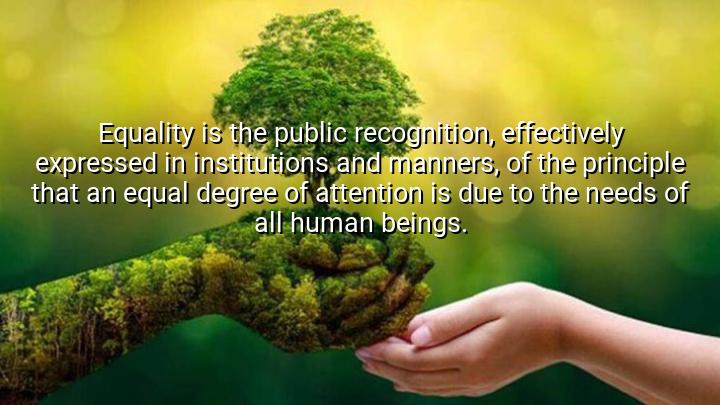




The quote, "Equality is the public recognition, effectively expressed in institutions and manners, of the principle that an equal degree of attention is due to the needs of all human beings," comes from Simone Weil, a French philosopher, activist, and mystic. Weil is known for her writings on justice, social ethics, and human suffering. In this quote, she offers a profound definition of equality, viewing it not just as an abstract ideal, but as something that must be actively recognized and expressed through societal structures, such as institutions and social manners.
Weil emphasizes that equality is not merely a theoretical concept but should be a practical and institutionalized reality. She argues that true equality is about ensuring that all individuals receive an equal degree of attention to their needs, regardless of their social status, background, or other differences. This requires both society and individuals to actively work toward creating systems and social norms that prioritize the well-being of every person.
The mention of "institutions and manners" highlights the importance of structural and cultural changes in achieving equality. Institutions—such as schools, governments, and healthcare systems—must be structured to treat all individuals with equal regard and to meet their basic needs. Similarly, manners—the ways people interact on a daily basis—must reflect the recognition that every person’s human dignity is equally valuable. Equality, for Weil, is about creating a society where every person’s needs are seen as important and deserving of attention.
Ultimately, Weil’s quote challenges us to think of equality as a living practice, not just a passive principle. It is about actively recognizing and responding to the needs of others through both institutional frameworks and personal interactions. This idea reflects Weil’s deep belief in the fundamental dignity of every individual and the collective responsibility to create a world where everyone’s needs are valued and met with equal care.

AAdministratorAdministrator
Welcome, honored guests. Please leave a comment, we will respond soon