

Each new generation of children grows up in the new environment its parents have created, and each generation of brains becomes wired in a different way. The human mind can change radically in just a few generations.
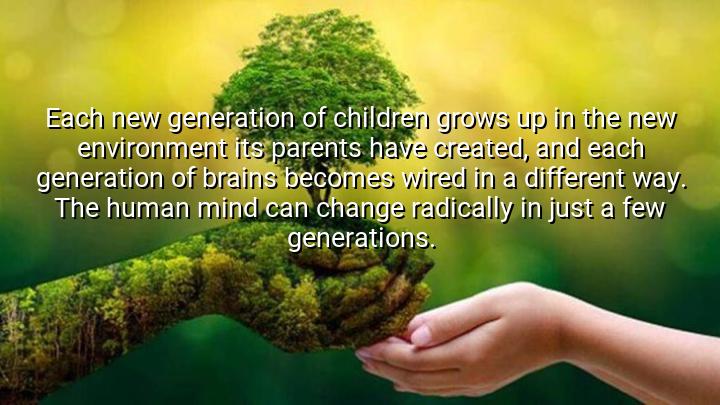




The quote "Each new generation of children grows up in the new environment its parents have created, and each generation of brains becomes wired in a different way. The human mind can change radically in just a few generations." by Alison Gopnik explores the dynamic relationship between environment, development, and the plasticity of the human brain. Gopnik, a renowned developmental psychologist and author, is known for her research on how children learn and how cognitive development is shaped not only by biology but also by cultural and social influences.
At the core of this quote is the idea that each generation of children is not born into a vacuum—they inherit and are shaped by the world their parents build, including its technologies, values, and challenges. As a result, the brains of these children adapt and rewire to fit the new context, often in ways that differ significantly from previous generations. This concept reflects modern understanding in neuroscience, particularly regarding neuroplasticity, which refers to the brain’s ability to change and form new connections throughout life.
By stating that the human mind can change "radically in just a few generations," Gopnik is challenging the notion that human nature is fixed or slow to evolve. Instead, she suggests that cognitive and emotional capacities, habits of thought, and even modes of attention can shift quickly in response to cultural transformations such as digital media, parenting styles, education systems, and social norms. This underscores how deeply interconnected our minds are with the environments we create.
Ultimately, Gopnik’s quote serves as both a reflection and a caution. It highlights the incredible adaptability of the human mind, while also emphasizing the responsibility of adults to shape healthy, enriching environments for the next generation. What we build today becomes the foundation for how future minds will think, feel, and relate to the world—showing the powerful feedback loop between culture, environment, and brain development.

AAdministratorAdministrator
Welcome, honored guests. Please leave a comment, we will respond soon