

Each generation imagines itself to be more intelligent than the one that went before it, and wiser than the one that comes after it.
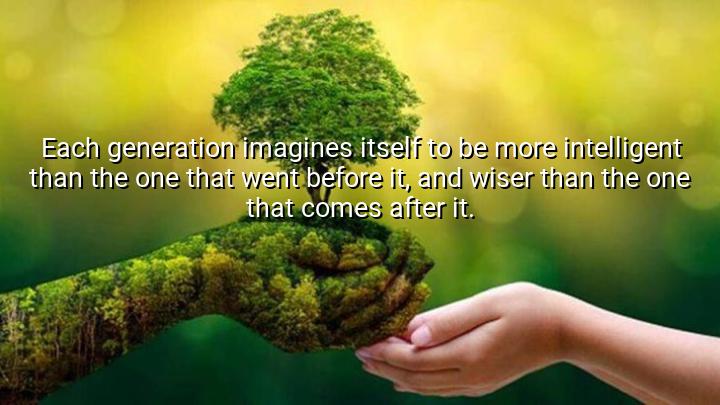




In this quote, George Orwell reflects on the common tendency of each generation to perceive itself as more intelligent and wise than the one that preceded it, while simultaneously thinking of itself as more advanced than the next generation. Orwell is pointing out a form of self-perception that leads people to believe they have a superior understanding of the world compared to those before or after them, even though this perception may not necessarily be grounded in reality.
Orwell’s observation speaks to the hubris that often accompanies generational thinking. As each generation experiences new challenges, advancements, and discoveries, it tends to see its own experiences and solutions as the pinnacle of human progress. This can lead to a feeling of superiority over past generations and an assumption that future generations will inevitably look up to them for wisdom.
The quote also touches on the cyclical nature of this attitude—while each generation believes it is more intelligent or wise, this belief is often based on subjective viewpoints rather than objective facts. The younger generation may see themselves as more enlightened because of technological or cultural advancements, while the older generation may be seen as out of touch or outdated. In reality, every generation contributes to human progress, but the perception of wisdom and intelligence often varies.
Ultimately, Orwell’s quote underscores the illusion of generational superiority, calling attention to the human tendency to overestimate one’s own progress while underestimating the contributions of others. It reflects a broader commentary on the ways people often view themselves as the pinnacle of history, forgetting the lessons, wisdom, and advancements passed down from previous generations.

AAdministratorAdministrator
Welcome, honored guests. Please leave a comment, we will respond soon