

Democratic principles are the result of equality of condition.
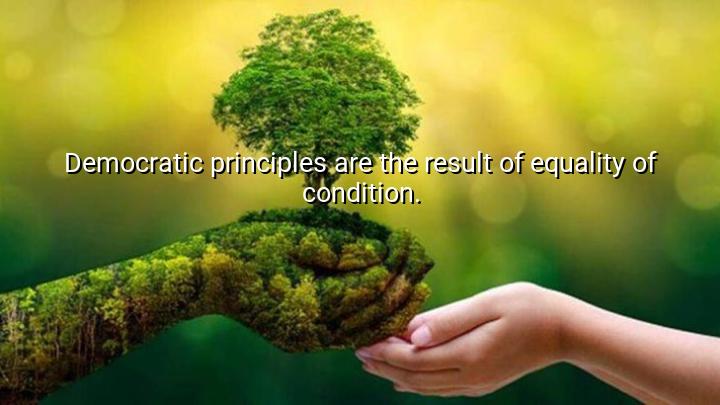




Mercy Otis Warren’s quote, "Democratic principles are the result of equality of condition," emphasizes the link between equality and the establishment of democracy. Warren is suggesting that for a true democratic society to function, the foundational condition of equality must exist. In her view, when all citizens have equal access to opportunities, resources, and rights, it creates a society in which democratic principles—such as participation, representation, and justice—can thrive. Without equality, the democratic system risks being skewed in favor of the powerful or privileged, undermining the very ideals it seeks to uphold.
The term "equality of condition" refers to a state in which there are no significant disparities in wealth, status, or opportunity among citizens. Warren is advocating for a society where these economic and social inequalities are reduced so that everyone has a fair stake in the political process. The "condition" of equality ensures that individuals are not excluded or oppressed based on their social class, race, or gender, which is essential for a democratic society where every person’s voice can be heard.
The origin of this quote lies in Warren’s role as a political writer and historian during the early days of the United States. A strong supporter of American independence, she was deeply involved in the intellectual and political movements that led to the American Revolution. Warren believed that liberty, justice, and democracy were intertwined with a commitment to equality. As one of the first women to actively participate in political thought and writing, she challenged the traditional structures of power that undermined democratic ideals.
Ultimately, Warren’s statement underscores the idea that true democracy cannot exist without equality among citizens. She argues that when social conditions are more equal, the democratic process becomes more inclusive and fair. For Warren, equality of condition is not just a moral necessity but a practical foundation for the functioning and stability of democracy.

AAdministratorAdministrator
Welcome, honored guests. Please leave a comment, we will respond soon