

Death is the liberator of him whom freedom cannot release, the physician of him whom medicine cannot cure, and the comforter of him whom time cannot console.
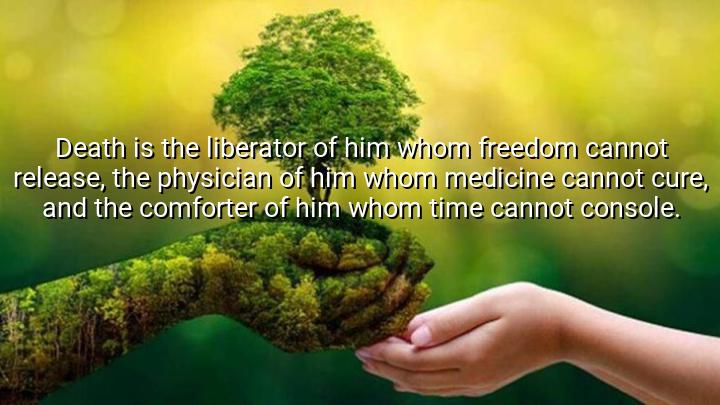




The quote "Death is the liberator of him whom freedom cannot release, the physician of him whom medicine cannot cure, and the comforter of him whom time cannot console" by Charles Caleb Colton explores the idea of death as a final resolution to suffering that cannot be addressed by other means. Colton suggests that for those who are bound by circumstances or suffering—whether physical, emotional, or psychological—death offers a form of release, healing, and comfort when all other options have failed.
The first part of the quote highlights death as a liberator for those who cannot be freed by freedom itself. This might refer to individuals who are trapped by their circumstances, whether it be by oppression, despair, or the limitations of life itself. Colton is acknowledging that, while freedom is a powerful force, it may not always be sufficient to bring true release to those who are suffering, and death can sometimes offer a way out.
The second part speaks to death as a physician for those whom medicine cannot cure. This suggests that there are situations where no medical intervention can provide relief, and death, in its finality, brings an end to suffering that could not otherwise be alleviated. The quote alludes to the idea that death provides a form of cure where traditional treatments are powerless, offering peace in the face of incurable illness or unbearable pain.
Finally, Colton refers to death as the comforter for those whom time cannot console. This reflects the notion that there are emotional wounds, such as grief or loss, that time alone cannot heal. For some, death may offer the ultimate comfort, putting an end to prolonged suffering that time or therapy cannot resolve. In this way, Colton portrays death not only as an end but as a form of resolution and peace for those who can find no solace elsewhere.
In conclusion, Colton's quote emphasizes the paradoxical role of death as a liberator, physician, and comforter. It suggests that while death is often seen as an end, it can also serve as a final remedy when freedom, medicine, and time fail to provide relief. The quote offers a contemplative view of death as an inevitable, yet sometimes necessary, conclusion to life's struggles.

AAdministratorAdministrator
Welcome, honored guests. Please leave a comment, we will respond soon