

Conservation is a state of harmony between men and land.
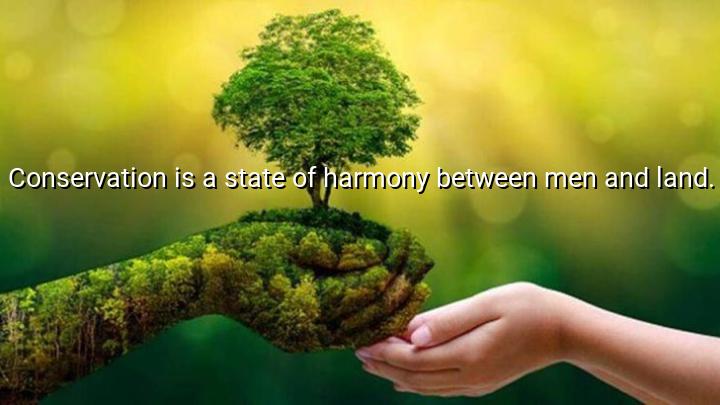




Aldo Leopold’s quote emphasizes the concept of conservation as not just the preservation of natural resources but as a deeper harmony between humankind and the land. Leopold suggests that conservation is about creating a relationship where human activity and natural ecosystems coexist in a balanced and mutually beneficial way. It’s a reminder that the land is not something to be exploited but something with which we should live in respect and equilibrium, recognizing that both human and environmental well-being are interconnected.
The origin of this quote comes from Leopold’s influential work in the field of ecology and environmental ethics. As a forester, ecologist, and author, Leopold’s most famous work, A Sand County Almanac, explores the importance of a land ethic—a philosophy that advocates for a responsible relationship with the natural world. This quote encapsulates his belief that true conservation involves more than just protecting land; it requires a fundamental shift in how we view and interact with nature. It’s not just about setting aside areas as reserves, but about integrating the values of sustainability and respect into everyday life.
Leopold’s idea of harmony between people and the land challenges the traditional view of nature as something to be dominated or controlled. Instead, he presents conservation as an ongoing process of collaboration and stewardship. By advocating for a more harmonious relationship with the environment, he calls on people to recognize that the health of the land is directly tied to the health of human societies. This approach requires long-term thinking and personal responsibility for the environment.
Ultimately, Leopold’s quote serves as a call to action for a more sustainable and ethical way of interacting with the world around us. Conservation, in his view, is not merely about protecting land in an abstract sense, but about fostering a deep, enduring connection between people and nature. It is through this harmony that true conservation can thrive, benefiting both the land and future generations.

AAdministratorAdministrator
Welcome, honored guests. Please leave a comment, we will respond soon