

Christians are supposed not merely to endure change, nor even to profit by it, but to cause it.
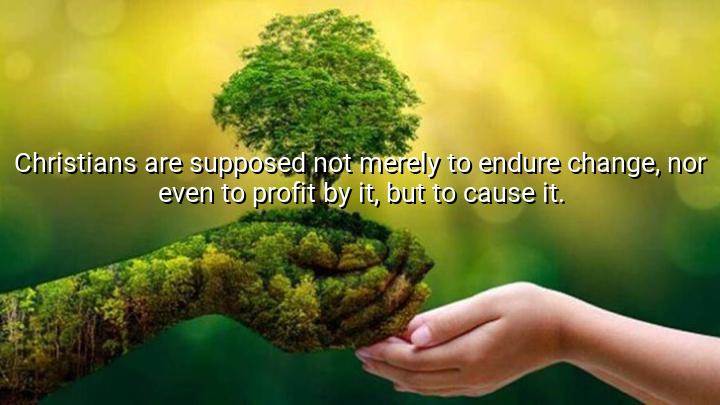




The quote, “Christians are supposed not merely to endure change, nor even to profit by it, but to cause it,” is attributed to Harry Emerson Fosdick, a prominent early 20th-century American pastor and influential theologian known for his progressive views and dynamic preaching. Fosdick often encouraged Christians to actively engage with the world rather than retreat from it. This quote reflects his belief that faith should inspire action and transformation, not passive acceptance.
At its core, the quote challenges believers to move beyond simply tolerating or benefiting from the changes happening around them. Fosdick asserts that Christians have a responsibility to be agents of change—to initiate and shape progress in society based on Christian principles of justice, love, and compassion. For him, the Christian mission involves actively working to improve the world, not merely adapting to circumstances.
This idea aligns with Fosdick’s broader theology, which emphasized the practical application of faith to social issues. He believed that Christians should embody the teachings of Jesus by addressing inequality, promoting peace, and fostering moral and spiritual growth within their communities. Change, therefore, is not an external force to be endured but a call to purposeful leadership.
Ultimately, Fosdick’s quote serves as a powerful reminder that faith demands courage, initiative, and a commitment to making a positive difference. It encourages Christians—and by extension, all people of conscience—to embrace the role of change-makers, actively shaping a better future rather than waiting passively for it to unfold.

AAdministratorAdministrator
Welcome, honored guests. Please leave a comment, we will respond soon