

Change can be frightening, and the temptation is often to resist it. But change almost always provides opportunities - to learn new things, to rethink tired processes, and to improve the way we work.
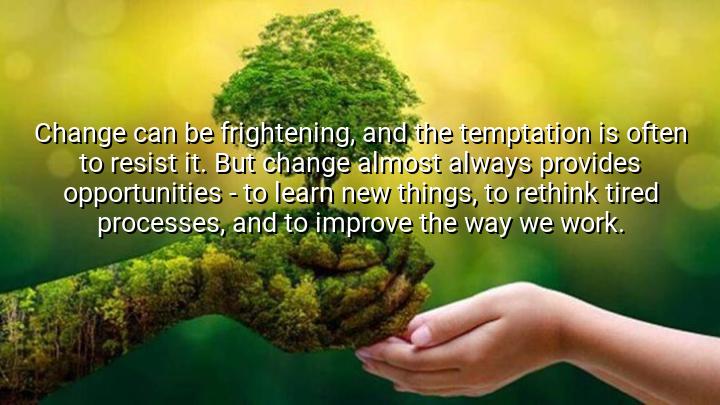




The quote “Change can be frightening, and the temptation is often to resist it. But change almost always provides opportunities—to learn new things, to rethink tired processes, and to improve the way we work” by Klaus Schwab reflects a nuanced understanding of the dual nature of change. Schwab acknowledges the fear and resistance that often accompany transitions, especially in professional or organizational settings. Yet, he urges us to view change not as a threat, but as a gateway to growth, innovation, and improvement.
As the founder and executive chairman of the World Economic Forum, Klaus Schwab is widely known for his thought leadership on the Fourth Industrial Revolution, a period marked by rapid technological advancement and shifts in how we live and work. His quote draws from his deep engagement with global leaders, industries, and systems. He emphasizes that while uncertainty can be unsettling, embracing adaptability and a willingness to learn is critical for long-term success.
The quote also highlights the value of rethinking outdated processes. In times of change, previously accepted ways of doing things may no longer serve us. Schwab suggests that change presents an ideal moment to reevaluate, streamline, and optimize operations—whether in business, policy, or everyday life. It’s not just about keeping up; it’s about taking the opportunity to do things better.
Ultimately, Schwab’s message is one of strategic optimism. By recognizing the inherent potential within change, we shift from a defensive posture to one of proactive transformation. Rather than avoiding disruption, we can use it as a catalyst to evolve, remain competitive, and foster a culture of continuous learning and adaptation.

AAdministratorAdministrator
Welcome, honored guests. Please leave a comment, we will respond soon