

Because of indifference, one dies before one actually dies.
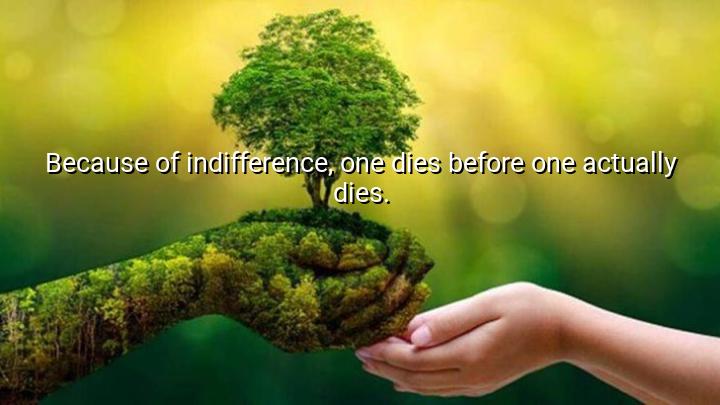




The quote "Because of indifference, one dies before one actually dies" by Elie Wiesel speaks to the destructive power of indifference and how it can dehumanize people, leading to a metaphorical death long before their physical death. Wiesel, a Holocaust survivor, author, and human rights advocate, experienced firsthand the horrors of genocide and the effects of societal apathy toward suffering. He suggests that when people fail to care or remain indifferent to the suffering of others, it strips them of their humanity and can cause a spiritual death or a loss of moral direction, even if they continue to live physically.
The origin of this quote comes from Wiesel’s deep reflection on the Holocaust and the collective silence and indifference that allowed atrocities to occur. In his writings, such as in Night, he frequently addresses how the lack of intervention or concern by the broader society contributed to the horrors experienced by Jews and other marginalized groups. This quote underscores the idea that inaction or disengagement from the suffering of others can result in a form of death, as it fosters a loss of empathy and moral responsibility.
Wiesel’s statement also highlights the importance of active compassion and awareness in combating injustice. By choosing indifference, individuals fail to engage with the world around them in a meaningful way, allowing harm to persist unchecked. This kind of passive death, which can manifest in emotional and ethical numbness, is seen by Wiesel as even more devastating than physical death because it signifies the loss of moral conscience and human connection.
Ultimately, Wiesel’s quote serves as a powerful reminder of the importance of empathy, action, and compassion in the face of suffering. It urges individuals and societies to not remain indifferent to the pain of others, emphasizing that true living requires a commitment to others' well-being and a refusal to stand by when injustice occurs.

AAdministratorAdministrator
Welcome, honored guests. Please leave a comment, we will respond soon