

The opposite of love is not hate, it's indifference.
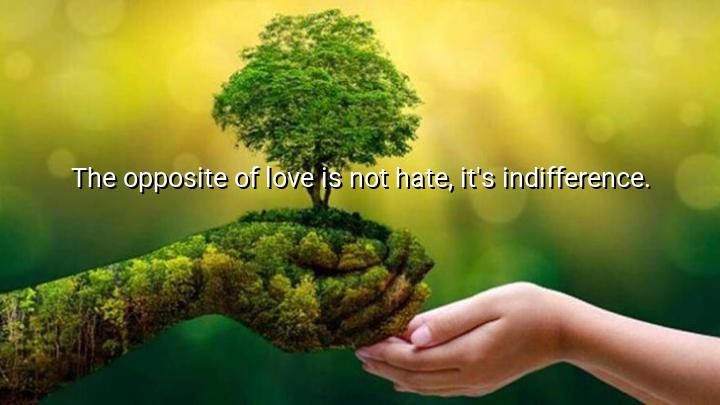




The quote "The opposite of love is not hate, it's indifference" by Elie Wiesel conveys a profound message about the nature of human emotions and relationships. Wiesel suggests that indifference—a lack of concern or care—is the true antithesis of love, not hate. While hate still involves a strong emotional response and an investment in the other person or situation, indifference is marked by apathy, a complete absence of feelings, whether positive or negative. In this sense, indifference is more damaging because it denies the human connection that love, even in its most negative form, still preserves.
Wiesel’s quote highlights how indifference can lead to dehumanization and disconnection. In a world where people are indifferent to the suffering of others, there is no empathy, no understanding, and no effort to bridge divides. In contrast, even hate, while destructive, at least acknowledges the existence of the other person or group. Indifference, however, represents a total erasure of the other’s significance, making it a more profound form of harm. This message is particularly important in the context of human rights and social justice, where indifference can lead to inaction and allow suffering to persist unchecked.
The origin of this quote stems from Wiesel’s experiences as a Holocaust survivor and his lifelong advocacy for human dignity and justice. Wiesel, who dedicated much of his life to speaking out against the atrocities of the Holocaust, saw first-hand how indifference could enable evil to thrive. His reflections often focused on the importance of awareness and compassion in the face of suffering, making his insight about indifference particularly resonant.
Ultimately, Wiesel’s quote challenges us to think deeply about the consequences of our emotional disengagement from the world around us. It calls for active compassion and engagement, reminding us that love is not just about feelings but about action and a commitment to recognizing the humanity in others. Indifference, by erasing this recognition, allows injustice and suffering to go unnoticed and unchallenged.

AAdministratorAdministrator
Welcome, honored guests. Please leave a comment, we will respond soon