

All human knowledge takes the form of interpretation.
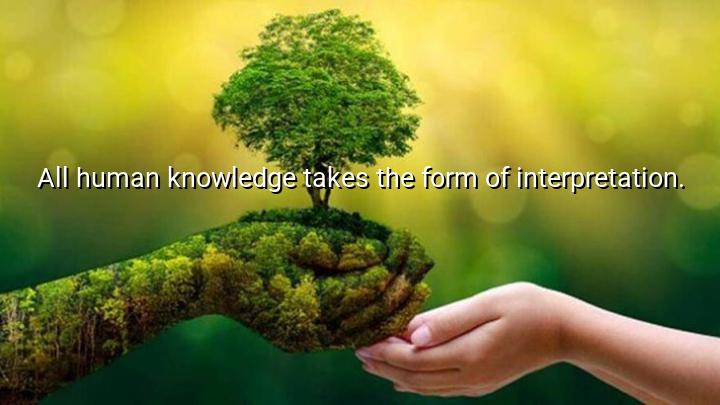




The quote "All human knowledge takes the form of interpretation." by Walter Benjamin emphasizes that knowledge is never purely objective but always filtered through human perspective. What we perceive, analyze, or understand about the world is shaped by interpretation, meaning our experiences, cultural backgrounds, and intellectual frameworks influence how we make sense of reality. Facts may exist independently, but the way we assign meaning to them is inherently subjective.
The meaning of this statement lies in recognizing that knowledge is not simply the passive reception of truth but an active process of giving context and understanding. For example, historical events are recorded as interpretations shaped by the historian’s point of view, and even scientific findings are subject to theoretical frameworks and assumptions. In this way, knowledge is not fixed but dynamic, always evolving as interpretations change over time.
The origin of this thought reflects Benjamin’s role as a 20th-century philosopher and cultural critic. Influenced by Marxism, theology, and literary theory, he was particularly interested in how human beings construct meaning through language, art, and culture. His belief that all knowledge is interpretive ties into his broader concerns with subjectivity, symbolism, and the limitations of absolute truth in a fragmented modern world.
Ultimately, Benjamin’s insight challenges the idea of absolute knowledge and reminds us that every attempt to know something is shaped by perspective. This view does not diminish the value of knowledge, but it encourages humility and awareness of the interpretive lenses we apply. In acknowledging this, we become more critical and thoughtful about how we construct and transmit meaning in human society.

AAdministratorAdministrator
Welcome, honored guests. Please leave a comment, we will respond soon