

Age imprints more wrinkles in the mind than it does on the face.
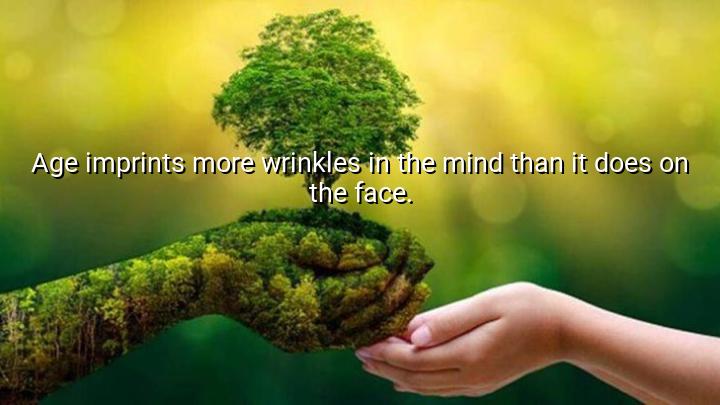




The quote, "Age imprints more wrinkles in the mind than it does on the face," comes from Michel de Montaigne, a French philosopher and essayist from the Renaissance period. Montaigne is best known for creating the essay as a literary form and for his reflections on human nature and personal experience. This quote suggests that the true effects of aging are not just visible on the body but are most profound on the mind.
Montaigne implies that while the physical signs of aging, such as wrinkles and changes in appearance, are noticeable, it is the impact on the mind that is more significant. Over time, the mind is affected by memories, experiences, and the accumulation of knowledge and wisdom. These mental "wrinkles" are metaphorical, representing how age can shape one's thoughts, beliefs, and perspectives, sometimes with more permanence than the physical marks left by time.
The quote reflects Montaigne's deep understanding of human psychology and his view that intellectual and emotional growth or decline over the years is a more meaningful process than physical changes. While our faces may age, the mind may undergo deeper transformations, for better or for worse. This idea ties into Montaigne’s broader philosophy of self-exploration and reflection on the passage of time.
In essence, Montaigne highlights the importance of nurturing the mind in later years, suggesting that the mental and emotional effects of aging are what truly define the experience of growing old. The quote reminds us that the aging process is as much about the mind as it is about the body, urging us to focus on cultivating our mental and emotional well-being as we age.

QAQuynh An
I find this quote quietly haunting. It suggests that the scars time leaves on the soul are more profound than those on the body. Is this a pessimistic view of aging, or a wake-up call to care for our inner life with just as much attention as our appearance? How can we tend to our thoughts, emotions, and beliefs in ways that keep our minds resilient?
TNTran nguyet
This makes me think about the people I know who seem ‘old’ not because of their age, but because of their mindset. They’ve grown cautious, less tolerant, and deeply nostalgic. Could it be that age isn’t what dulls us, but how we process the years we’ve lived? If so, maybe the real challenge is to keep our minds fresh, no matter how wrinkled our skin becomes.
DPNguyen Duc Phuc
Such a powerful metaphor. I’m curious—how much of mental aging is inevitable, and how much is a product of lifestyle and mindset? If we continue to challenge ourselves intellectually, remain socially engaged, and embrace change, can we resist those ‘wrinkles of the mind’? Or are some changes—like bitterness, regret, or fear—just unavoidable side effects of growing older?
JJahsvsh
Montaigne’s words hit a nerve. It’s easy to obsess over outward signs of aging, yet how often do we reflect on what age does to our thought patterns, assumptions, or even our fears? Are we growing wiser with age, or just more hesitant, more rigid? Maybe mental aging is something we can actively fight—through curiosity, self-reflection, or lifelong learning.
HDMinh Hoang Duc
This quote feels incredibly poignant. It makes me wonder whether the emotional and psychological effects of aging are actually more burdensome than the physical ones. Do we talk enough about how age shapes our outlook, our flexibility, or our openness to new ideas? Perhaps society needs to value mental rejuvenation just as much as physical health when it comes to aging gracefully.