

After thirty, a body has a mind of its own.
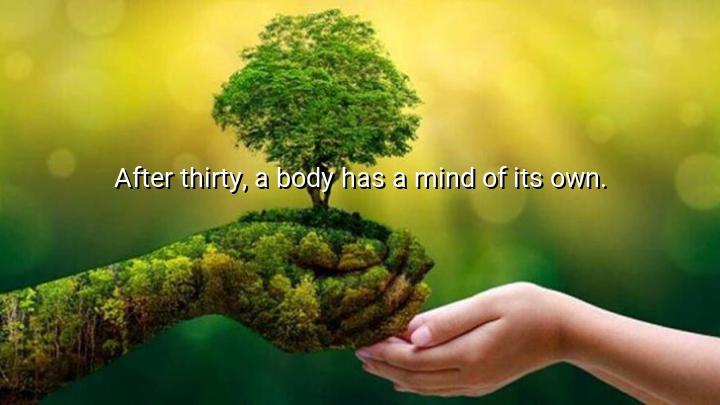




The quote "After thirty, a body has a mind of its own" by Bette Midler humorously addresses the physical changes that often begin to occur as people move into their thirties. Midler, an American singer, actress, and comedian, uses this statement to reflect on the way our bodies start to behave independently of our will as we age. The idea is that, as we grow older, we can no longer easily control every aspect of our physical well-being, as the body begins to show signs of wear and change.
Midler's words highlight the inevitable reality of aging, particularly how the body sometimes seems to take on a life of its own after thirty. This could refer to slower metabolism, increased fatigue, or physical limitations that become more noticeable. Unlike the youthful years, when the body feels more responsive and resilient, in our thirties, we often begin to experience how the body may not always cooperate with our desires, such as when it takes longer to recover from exercise or when aches and pains become more frequent.
The quote also reflects the frustration that many feel as they realize their bodies no longer function in the same way they once did. It speaks to the loss of control that comes with aging, where the mind may still feel youthful and capable, but the body seems to have its own limitations and needs. It is a playful yet truthful observation of how the passage of time can affect our relationship with our own physical selves.
Ultimately, Midler's quote uses humor to draw attention to the physical realities of aging, particularly the shift that often happens in our thirties, when our bodies seem to change without our permission. It captures the universal experience of aging in a light-hearted way, acknowledging the challenges that come with it while embracing the humor in how the body develops a mind of its own.

LQLnh Quyenn
This quote hits a little too close to home. I used to dismiss comments like this as jokes, but now I genuinely relate. It’s like the body develops a personality—one that doesn’t always agree with your plans! Do you think this shift is universal, or do lifestyle choices play a bigger role than we admit? Maybe some people delay this moment by staying extremely fit and others just roll with it.
HCLe Hoang Chau
Isn’t it ironic how aging quietly creeps in and takes over the controls without asking? This quote got me thinking about autonomy and agency. We like to think we’re fully in charge of our lives, but our bodies often have their own agenda. How do we maintain a sense of empowerment as our physical selves begin to challenge our mental expectations? That’s a real balancing act.
HPXuan Hung Pham
Honestly, this quote makes me feel seen. There's a kind of truth here that only hits once you cross that invisible threshold of thirty. Suddenly, health isn't automatic anymore—you have to negotiate with your body to get through the day. But I wonder, does this shift teach us to be more in tune with our physical selves? Maybe it’s less about losing control and more about finally learning how to listen.
TNTruong Nguyen
I laughed when I read this, but then I nodded in agreement. There’s a strange sense of betrayal when your body stops cooperating the way it used to. You sleep wrong and it takes a week to recover, or your metabolism suddenly slows down. Why do we not talk more openly about this stage of life? It seems like everyone experiences it but pretends it’s not happening.
QAtrinh quynh anh
This quote strikes a chord with me. I feel like there’s a hidden message here about acceptance—acknowledging that we’re no longer in sync with our younger selves. But why does society act like it’s a failure to feel these shifts after thirty? Is it possible to reframe this as a transition into a wiser, more intuitive relationship with our bodies, rather than seeing it as a decline or betrayal?