

A woman asking 'Am I good? Am I satisfied?' is extremely selfish. The less women fuss about themselves, the less they talk to other women, the more they try to please their husbands, the happier the marriage is going to be.
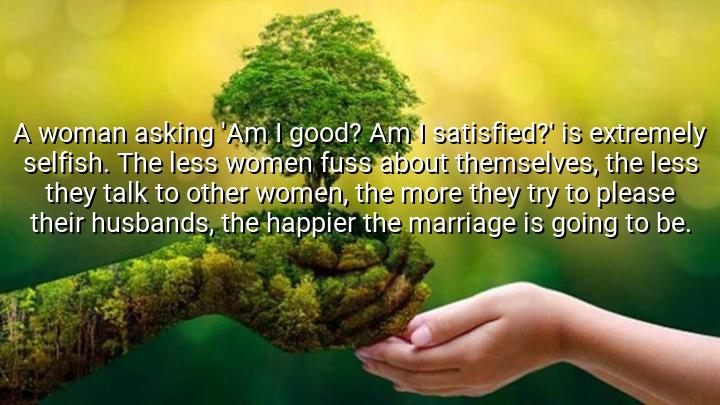




The quote by Barbara Cartland reflects a traditional and highly conservative view of marriage and gender roles. Cartland suggests that when a woman focuses on her own desires or satisfaction—asking questions like “Am I good? Am I satisfied?”—she is being selfish. According to her perspective, minimizing self-interest and prioritizing the needs of one’s husband is the key to a happy and successful marriage. The meaning behind the quote emphasizes submission, selflessness, and the reinforcement of patriarchal norms within domestic life.
The origin of this quote comes from Cartland’s career as a prolific romance novelist in the 20th century. Known for writing hundreds of books that often portrayed idealized and highly conventional romantic relationships, Cartland frequently reflected the societal expectations of women prevalent during her time. Her advice in this quote mirrors the values in her novels, where marriage is often framed as a woman’s duty to maintain harmony and please her husband.
This statement also highlights the cultural assumptions about female behavior and social dynamics. Cartland implies that minimizing interaction with other women and focusing on fulfilling her husband’s desires will reduce conflict and create domestic happiness. Her perspective reinforces the idea that women’s roles are defined largely in relation to the men they marry, rather than as autonomous individuals with their own needs and desires.
Ultimately, the quote captures a historical viewpoint on marriage and gender roles, reflecting early-to-mid 20th-century societal expectations. While controversial and considered outdated today, it provides insight into the values Cartland promoted in both her personal advice and literary works, emphasizing obedience, selflessness, and marital duty as cornerstones of a happy union.

AAdministratorAdministrator
Welcome, honored guests. Please leave a comment, we will respond soon