

A lawn is nature under totalitarian rule.
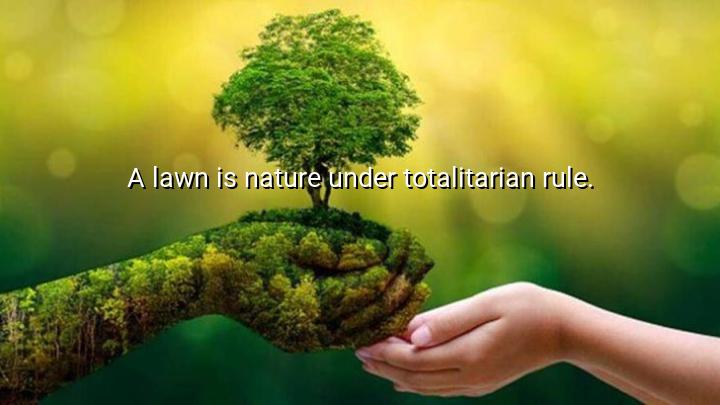




The quote "A lawn is nature under totalitarian rule" by Michael Pollan critiques the cultivation of manicured lawns, suggesting that they represent a form of artificial control over nature. Pollan likens the strict, uniform appearance of lawns to a totalitarian regime, where nature is forced into conformity and restricted from its natural diversity. In this metaphor, the lawn becomes a symbol of human efforts to impose order, uniformity, and control over the environment, limiting the variety and freedom that typically characterize natural ecosystems.
Pollan’s words also draw attention to the contrast between a lawn—which is often an artificial, meticulously maintained space—and the wildness and diversity found in natural landscapes. Lawns typically consist of a single type of grass, with little to no other plants, insects, or wildlife, creating a sterile environment that suppresses biodiversity. By referring to this as "totalitarian," Pollan highlights how the desire for perfect, neat outdoor spaces often leads to the elimination of natural processes and the imposition of human ideals on the landscape.
In a broader sense, the quote critiques modern landscaping practices and the cultural obsession with perfectly manicured lawns, which can require excessive amounts of water, pesticides, and fertilizers. Pollan may be questioning the cost of maintaining these artificial spaces and whether the imposition of such strict control over nature is truly in harmony with environmental sustainability. His statement reflects a deeper commentary on how humans often seek to dominate and "civilize" nature, even at the expense of ecological balance.
Michael Pollan is a well-known American author, journalist, and environmental advocate. His works, such as The Omnivore's Dilemma and The Botany of Desire, explore the relationships between humans and nature, often critiquing modern agricultural and gardening practices. This quote, in particular, reflects his concerns about how human interventions in the natural world, such as the maintenance of lawns, can lead to homogenization and environmental detachment.

AAdministratorAdministrator
Welcome, honored guests. Please leave a comment, we will respond soon