

A garden is a complex of aesthetic and plastic intentions; and the plant is, to a landscape artist, not only a plant - rare, unusual, ordinary or doomed to disappearance - but it is also a color, a shape, a volume or an arabesque in itself.
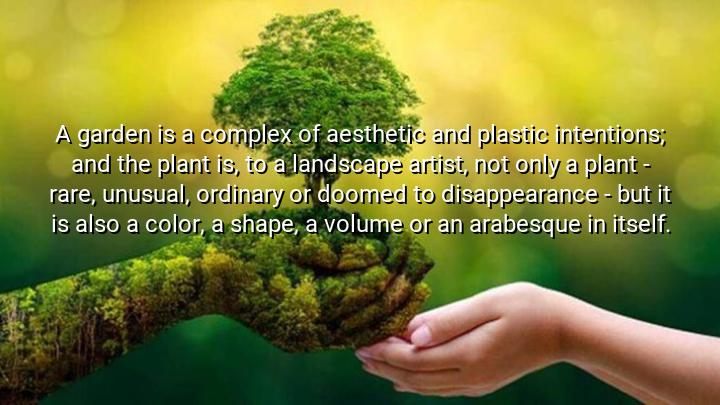




The quote by Roberto Burle Marx, "A garden is a complex of aesthetic and plastic intentions; and the plant is, to a landscape artist, not only a plant - rare, unusual, ordinary or doomed to disappearance - but it is also a color, a shape, a volume or an arabesque in itself," emphasizes the multi-dimensional role that plants play in the design of a garden. Burle Marx, a renowned landscape architect, suggests that a garden is not just about the plants themselves, but about the aesthetic and artistic intentions behind their placement. To a landscape artist, a plant transcends its biological function and becomes part of the overall design, contributing to the garden’s visual composition through its color, shape, and volume.
In this context, the plant is seen as a design element, much like any other medium used in art. Burle Marx’s comparison of plants to an arabesque underscores the artistic and decorative value of plants, suggesting that they are integral to creating a harmonious visual composition. The reference to a plant as a color or shape points to the way landscape artists carefully consider the visual impact of plants, using them to create balance and movement within the garden.
The mention of plants being "rare, unusual, ordinary or doomed to disappearance" highlights the impermanence and diversity of nature. Burle Marx acknowledges that plants, as part of the living world, can be fleeting or subject to environmental changes, but their role in the garden design remains crucial. This speaks to the dynamic nature of a garden, where even common or ephemeral plants contribute meaningfully to the overall artistic vision.
The origin of this quote lies in Roberto Burle Marx’s innovative approach to landscape architecture, where he combined elements of modernist art with his love for nature. Known for his groundbreaking work in landscape design, particularly in Brazil, Burle Marx viewed gardens as living works of art that went beyond mere decoration. His approach transformed the role of plants from functional objects to artistic expressions, elevating the garden to a dynamic, ever-evolving space that combines nature with human creativity.

AAdministratorAdministrator
Welcome, honored guests. Please leave a comment, we will respond soon