

A flower falls, even though we love it; and a weed grows, even though we do not love it.
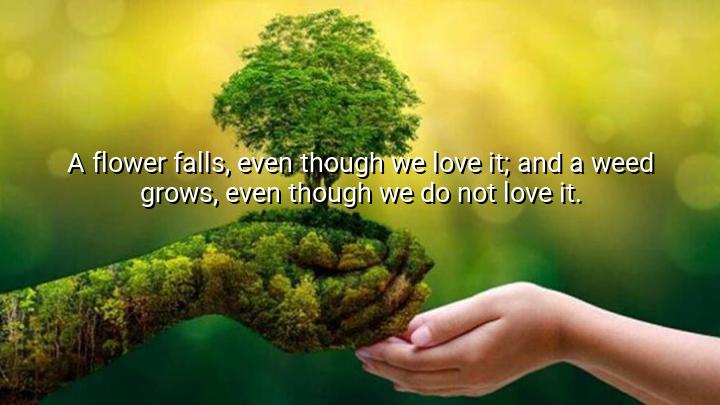




In this quote, Dogen explores the natural inevitability of life and death, using the metaphor of a flower and a weed to illustrate how certain aspects of life unfold regardless of our emotions or preferences. He points out that a flower, which is loved and cherished, will inevitably fall, symbolizing the transient nature of beauty and life itself. In contrast, a weed, which is typically unwanted, grows effortlessly, representing how even things we do not desire can thrive or persist.
Dogen’s statement highlights the concept of impermanence, which is central to many Buddhist teachings. Just as a flower falls despite our love for it, everything in life—whether good or bad—is subject to change and eventual decline. Similarly, the weed's growth represents the unpredictability of life, where things we may not value or seek can flourish without effort. This reflects the idea that life does not always adhere to our desires or expectations, and that both growth and decay are natural processes.
The origin of this quote comes from Dogen, a 13th-century Japanese Zen master and philosopher, known for his teachings on impermanence and the nature of existence. His philosophy often focused on the acceptance of life’s inherent uncertainties and the importance of living in harmony with the natural flow of the universe. This quote reflects his deep understanding of the transient nature of both beauty and suffering.
Ultimately, Dogen’s quote teaches us to embrace the natural rhythms of life without attachment to what we love or reject. The falling of the flower and the growth of the weed remind us that life continues regardless of our preferences, and that acceptance of both its fleeting beauty and its unwanted aspects is essential for spiritual growth and peace.

AAdministratorAdministrator
Welcome, honored guests. Please leave a comment, we will respond soon