

Yom Kippur, the Day of Atonement, is the holy of holies of Jewish time. It is that rarest of phenomena, a Jewish festival without food. Instead it is a day of fasting and prayer, introspection and self-judgment when, collectively and repeatedly, we confess our sins and pray to be written into God's Book of Life.
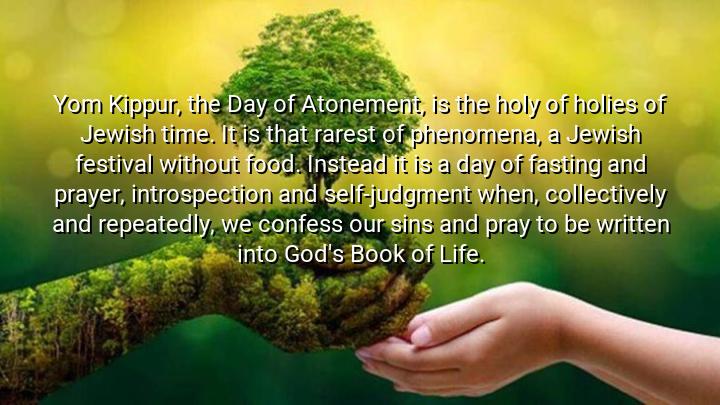




This quote by Rabbi Jonathan Sacks reflects the deep spiritual significance of Yom Kippur, known in Judaism as the Day of Atonement. Sacks describes it as the "holy of holies of Jewish time," emphasizing its sacred place in the Jewish calendar. Unlike other Jewish festivals, which are often marked by celebration and shared meals, Yom Kippur is unique in that it is observed through fasting and prayer.
Sacks highlights that this solemn day is devoted to introspection and self-judgment. It’s a time when individuals and communities pause to reflect on their actions over the past year, engage in confession of sins, and seek forgiveness. The ultimate spiritual goal is to be written into God’s Book of Life, a central image in Yom Kippur liturgy symbolizing divine mercy and renewal.
The origin of this quote comes from Sacks’s broader writings and sermons, where he often explored the ethical and spiritual dimensions of Jewish practice. As a leading religious thinker and former Chief Rabbi of the United Kingdom, Sacks was known for making Jewish traditions accessible and meaningful to a global audience. His description of Yom Kippur captures both its ritual elements and its profound call for moral accountability and transformation.

AAdministratorAdministrator
Welcome, honored guests. Please leave a comment, we will respond soon