

Without forgiveness, there's no future.
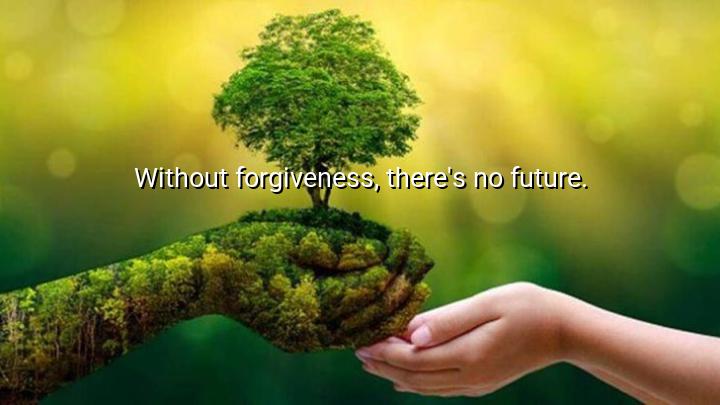




The quote by Desmond Tutu emphasizes the vital role of forgiveness in shaping the future, both on a personal and societal level. Tutu suggests that without the act of forgiving, individuals and communities are bound to remain trapped in the past, held back by anger, resentment, and bitterness. Forgiveness, in his view, is not just a moral choice but a necessary step in moving forward, allowing people to heal, grow, and build healthier relationships and societies. The idea is that without letting go of past hurts, there can be no meaningful progress or reconciliation.
Tutu’s statement reflects his deep understanding of the process of healing, particularly in the context of post-apartheid South Africa. As an Archbishop and a prominent figure in the truth and reconciliation process, Tutu witnessed firsthand the transformative power of forgiveness in bringing a divided society together. He believed that reconciliation was impossible without the willingness to forgive, even in the face of profound injustice and suffering. In this context, forgiveness is seen not as condoning wrongdoings but as a means of breaking the cycle of hatred and opening up a path to a more harmonious future.
The origin of this quote stems from Tutu’s work in leading the Truth and Reconciliation Commission in South Africa, which was tasked with helping the nation heal from the atrocities committed during apartheid. Tutu, known for his emphasis on compassion, justice, and peace, advocated for the importance of forgiveness as a way to build a just and peaceful society. His quote encapsulates his broader philosophy that forgiveness is essential for moving beyond past injustices and creating a more unified future.
Ultimately, Tutu’s quote highlights the idea that forgiveness is not only a personal virtue but a societal necessity. It underscores the belief that healing, progress, and a better future can only be achieved when individuals and communities are willing to embrace forgiveness and let go of past wrongs. This transformative act of forgiveness allows for emotional, moral, and social growth, enabling people to overcome trauma and rebuild stronger, more connected communities.

AAdministratorAdministrator
Welcome, honored guests. Please leave a comment, we will respond soon