

Wild animals never kill for sport. Man is the only one to whom the torture and death of his fellow creatures is amusing in itself.
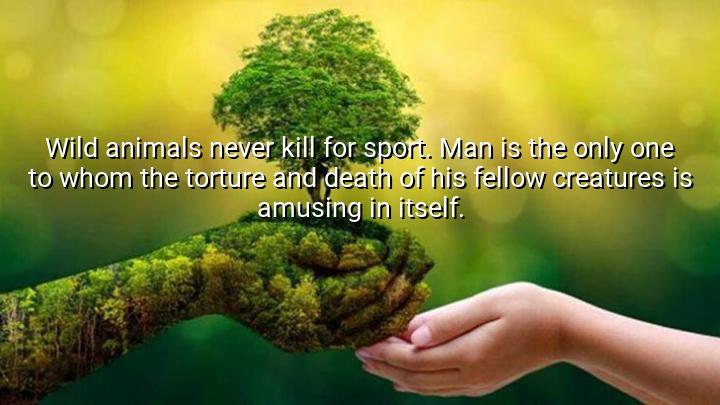




James Anthony Froude’s quote, "Wild animals never kill for sport. Man is the only one to whom the torture and death of his fellow creatures is amusing in itself," critiques the destructive tendencies of human nature in relation to animals. Froude contrasts the natural behavior of wild animals, who kill only for survival, with the human tendency to engage in violence for entertainment or sport. This quote highlights the moral difference between the instinctual actions of animals and the deliberate cruelty sometimes exhibited by humans in the name of recreation or dominance.
Froude’s words call attention to the ethical implications of human activities that involve the suffering and killing of animals, such as hunting for sport, and the desensitization to violence that can result from such practices. Unlike animals that kill out of necessity, humans have the capacity to choose to inflict harm for pleasure or sport, which Froude suggests is morally problematic and speaks to a darker aspect of humanity.
As a historian and writer, Froude was concerned with the progress of civilization and the moral values that guided societies. His critique of human behavior, particularly in relation to the treatment of animals, reflects a broader reflection on human ethics and the consequences of our actions. Froude’s perspective aligns with later animal rights movements, which emphasize compassion and the ethical treatment of non-human creatures.
The origin of this quote stems from Froude’s views on human morality and the way humans distinguish themselves from other species. His writings often questioned societal norms and examined the contradictions in human behavior. In this particular quote, Froude draws attention to the troubling contrast between human cruelty and the more instinct-driven actions of animals, urging a reflection on our treatment of other living beings.

AAdministratorAdministrator
Welcome, honored guests. Please leave a comment, we will respond soon