

Why are ecologists and environmentalists so feared and hated? This is because in part what they have to say is new to the general public, and the new is always alarming.
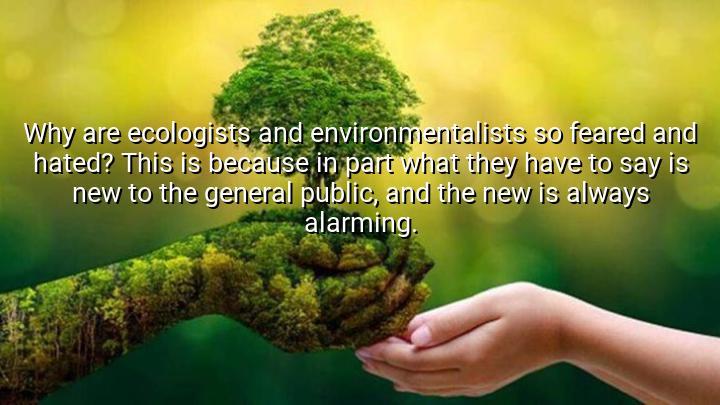




The quote “Why are ecologists and environmentalists so feared and hated? This is because in part what they have to say is new to the general public, and the new is always alarming” by Garrett Hardin emphasizes the resistance and skepticism that often greet new ideas about the environment. Hardin highlights that ecologists and environmentalists challenge conventional thinking by presenting information that is unfamiliar or uncomfortable. The quote underscores the notion that human reaction to novelty often involves fear or hostility, especially when it demands change or awareness of potential risks.
Garrett Hardin, an American ecologist and philosopher, is best known for his work on population ecology and the concept of the “tragedy of the commons”. This quote reflects his broader observation about society’s reluctance to confront ecological realities. Hardin understood that environmental insights often provoke discomfort because they question established practices, habits, and economic interests, making the messenger of these ideas a target of fear or opposition.
The quote also illustrates a broader principle about innovation, change, and social perception. Hardin points out that when knowledge is new, especially knowledge about environmental limits or sustainability, it can appear threatening to existing structures and beliefs. This explains why those advocating for ecological awareness and conservation may face resistance, even when their message is crucial for long-term survival and well-being.
Ultimately, Hardin’s statement serves as a reminder that progress and understanding often encounter initial fear and skepticism. It encourages people to approach new environmental insights with openness rather than hostility, showing that embracing change and learning from experts is essential for safeguarding ecosystems, resources, and future generations. His words highlight the tension between human comfort with the familiar and the necessity of confronting uncomfortable truths.

AAdministratorAdministrator
Welcome, honored guests. Please leave a comment, we will respond soon