

No one should be able to enter a wilderness by mechanical means.
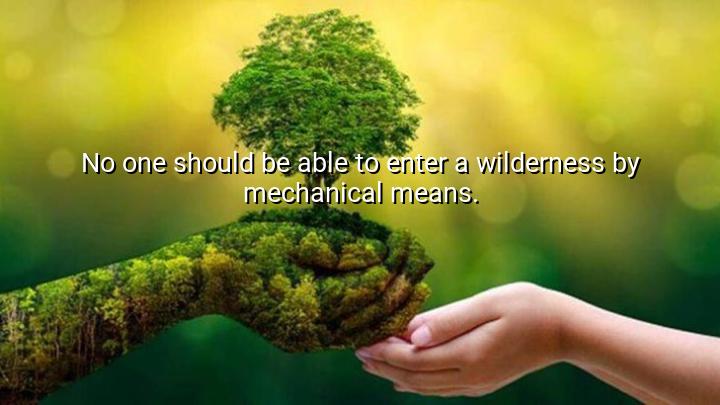




The quote by Garrett Hardin, "No one should be able to enter a wilderness by mechanical means," emphasizes the need to preserve the pristine nature of wild environments. Hardin, an ecologist and environmental thinker, highlights the idea that wilderness should remain largely untouched by human technology and machinery, allowing ecosystems to function naturally and maintaining the authentic experience of nature for those who visit. The quote reflects a philosophy that values minimal human interference in natural habitats.
By restricting mechanical means, Hardin underscores the importance of limiting the impact humans have on fragile ecosystems. He suggests that entering wild spaces should require effort and mindfulness, encouraging responsibility, respect, and a deeper connection with nature. This approach preserves the integrity of wildlife, vegetation, and landscapes, reducing the risks of pollution, habitat destruction, and ecological disruption.
The origin of this quote comes from Hardin’s writings on environmental ethics and conservation, particularly in his discussions about human population, resource use, and the concept of the "tragedy of the commons." Hardin often advocated for careful management of natural resources and the recognition that wilderness has intrinsic value beyond human convenience or recreation. His perspective reflects a broader environmental ethic emphasizing stewardship and restraint.
Ultimately, Hardin’s quote serves as both a principle and a warning. It encourages society to respect wilderness and minimize technological intrusion, fostering a more authentic and sustainable relationship with the natural world. By limiting mechanical access, humans are challenged to engage with nature thoughtfully, preserving its beauty, complexity, and ecological balance for future generations.

AAdministratorAdministrator
Welcome, honored guests. Please leave a comment, we will respond soon