

When from our better selves we have too long been parted by the hurrying world, and droop. Sick of its business, of its pleasures tired, how gracious, how benign is solitude.
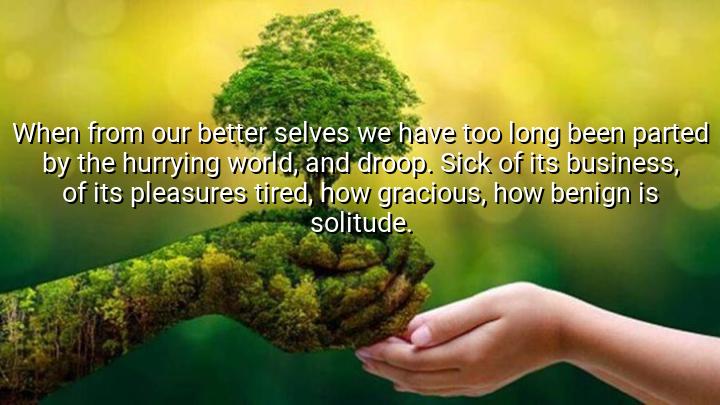




The quote by William Wordsworth reflects the poet’s belief in the restorative power of solitude. He observes that when we have been separated for too long from our "better selves" by the demands of the "hurrying world," we often begin to feel emotionally drained. Wordsworth describes this state as becoming "sick of its business" and "pleasures tired," suggesting that the constant pursuit of worldly ambitions and superficial enjoyments can leave us feeling unfulfilled.
Wordsworth then praises solitude as "gracious" and "benign," indicating that time spent alone allows us to reconnect with our inner selves and regain balance. This aligns with his broader Romantic philosophy, which emphasized introspection, emotional depth, and the healing influence of nature. Solitude, for Wordsworth, is not loneliness but a necessary pause from the chaos of daily life.
The origin of the quote comes from Wordsworth’s poetry, which often explored themes of nature, human emotion, and the impact of modernity on the spirit. As a leading figure of the Romantic Movement in the late 18th and early 19th centuries, he was deeply concerned with how industrialization and urban life distanced people from their authentic selves and the natural world.
Ultimately, Wordsworth’s quote serves as a reminder of the value of quiet reflection. In a fast-paced world driven by business and external distractions, taking time for solitude allows individuals to nurture their better selves, find peace, and restore their sense of purpose.

AAdministratorAdministrator
Welcome, honored guests. Please leave a comment, we will respond soon