

When death, the great reconciler, has come, it is never our tenderness that we repent of, but our severity.
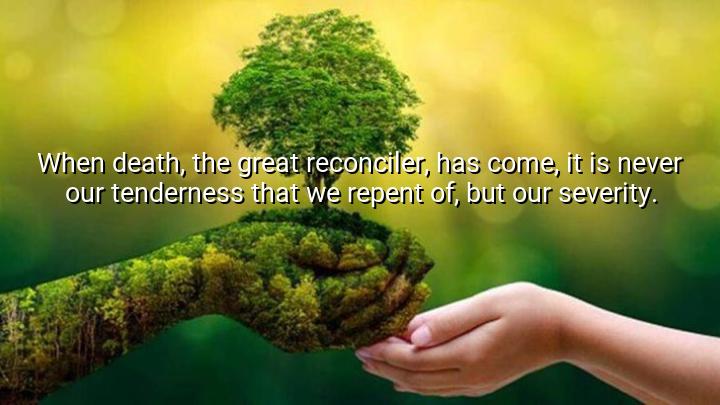




The quote "When death, the great reconciler, has come, it is never our tenderness that we repent of, but our severity" by George Eliot speaks to the human experience of regret and reflection at the end of life. Eliot, an English novelist and poet, explores the idea that in the face of death, it is often our actions of harshness or severity—rather than acts of compassion and tenderness—that we come to regret. She suggests that when looking back on our lives, we may feel sorrow for the moments we were too strict, judgmental, or unkind, but we are unlikely to regret the times we showed kindness or understanding.
The origin of this quote comes from Eliot’s exploration of human emotions and relationships. In her works, she frequently examined how people navigate morality, compassion, and personal growth. The statement highlights a central theme in her writing: the importance of living with empathy and grace. By positioning death as the great reconciler, Eliot suggests that in the end, the harshness of life fades, and only our acts of love and tenderness endure as meaningful.
Eliot’s quote reflects a common theme in philosophical and literary reflections on death—the idea that death brings clarity to our lives, allowing us to see what truly matters. Severity, in this context, refers to the emotional distance or strictness we sometimes impose on others, often out of fear or pride. At the moment of death, these harsh behaviors seem unimportant, while acts of compassion feel more valuable. This emphasizes how our human connections and acts of kindness become central as we near the end of our lives.
Ultimately, this quote serves as a reminder to live with kindness and understanding, as these are the qualities that will likely bring us peace when we reflect on our lives. Eliot encourages us to soften our approach to others, emphasizing that in the end, it is not our rigidness or harsh judgments that we will cherish, but the moments of tenderness and compassion we have shown to those around us.

AAdministratorAdministrator
Welcome, honored guests. Please leave a comment, we will respond soon