

The golden moments in the stream of life rush past us, and we see nothing but sand; the angels come to visit us, and we only know them when they are gone.
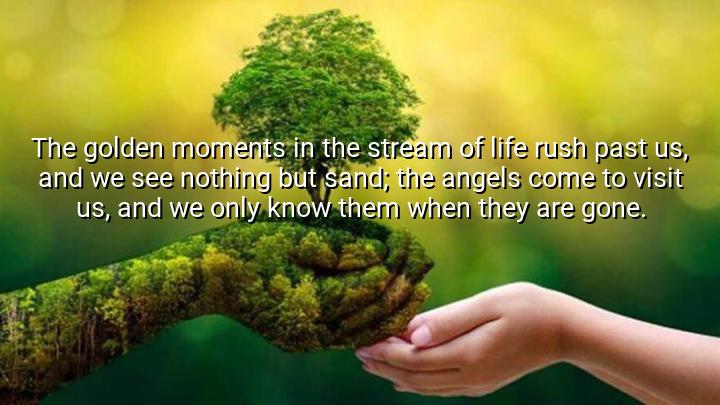




The quote by George Eliot, “The golden moments in the stream of life rush past us, and we see nothing but sand; the angels come to visit us, and we only know them when they are gone,” reflects on the ephemeral nature of life and the human tendency to overlook beauty and blessings. Eliot suggests that many of life’s precious experiences—the “golden moments”—pass quickly, often unnoticed, while opportunities for gratitude, connection, or insight are only fully appreciated in retrospect. The quote underscores the importance of mindfulness and awareness in daily life.
George Eliot, the pen name of 19th-century English novelist Mary Ann Evans, was known for her psychological insight and social commentary. Her works, such as Middlemarch and The Mill on the Floss, often explore human nature, moral choices, and the subtleties of everyday life. This quote exemplifies her attention to the fleeting and often overlooked moments that shape human experience and the regret that comes from not recognizing them in time.
The origin of the quote lies in Eliot’s reflections on life’s transience and hidden value, where she often used metaphors of nature and time to illustrate human experience. By comparing life to a stream and its unnoticed joys to “sand,” she conveys how ordinary moments can mask extraordinary significance. Similarly, the reference to angels emphasizes that moments of guidance, inspiration, or love are often recognized only after they have passed.
In essence, Eliot’s words remind us to cherish the present and cultivate awareness and gratitude. The quote encourages living with attentiveness to fleeting beauty, appreciating the people and experiences around us before they slip away. It serves as a timeless reflection on the value of mindfulness and the importance of seeing the extraordinary in the ordinary.

AAdministratorAdministrator
Welcome, honored guests. Please leave a comment, we will respond soon