

When death comes it is never our tenderness that we repent from, but our severity.
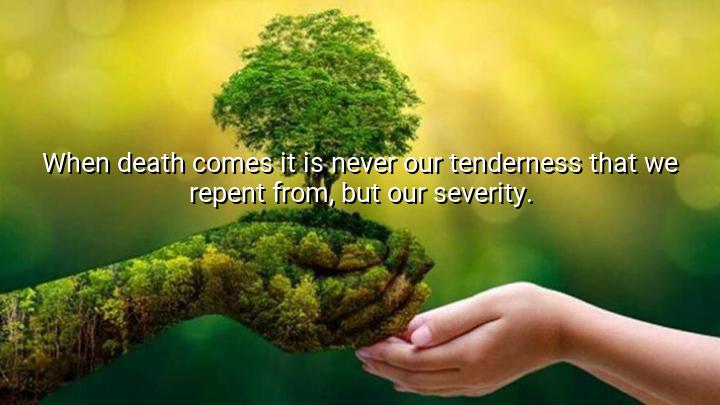




The quote "When death comes it is never our tenderness that we repent from, but our severity." by George Eliot reflects a deep reflection on regret and the human experience of death. Eliot, a renowned novelist and thinker, is suggesting that at the end of life, it is not our acts of kindness, compassion, or tenderness that we wish we had done more of, but rather our moments of harshness, coldness, or severity. In other words, we tend to regret the times when we were too strict, judgmental, or unkind to others, especially when those moments could have been softened by more empathy or understanding.
Eliot’s perspective speaks to the human condition, emphasizing that when faced with the certainty of death, we often evaluate our relationships and interactions. The quote suggests that severity, whether in our words, actions, or attitudes, leaves a lasting mark, one that is harder to reconcile with our own sense of moral integrity. Tenderness, by contrast, is rarely a source of regret because it aligns with our innate desire for connection and compassion.
This quote also reflects the theme of self-examination in the face of mortality, where individuals often seek reconciliation with their actions. Eliot’s writing frequently explored the complexities of emotion and ethics, and this quote highlights how we are more likely to feel remorse for moments when we were less than kind or understanding, rather than when we acted out of love or affection. It suggests that severity in relationships or actions, especially toward those we care about, can leave us with a sense of loss or missed opportunity.
The origin of this quote lies in Eliot’s philosophical and psychological approach to character development and human emotion in her works. As an author, she was deeply interested in the moral dilemmas of her characters, exploring themes of love, redemption, and the consequences of actions. This quote reflects her belief that at the end of life, we are more likely to reflect on the harm caused by our harshness than the good in our compassionate acts.

AAdministratorAdministrator
Welcome, honored guests. Please leave a comment, we will respond soon