

When a person doesn't have gratitude, something is missing in his or her humanity. A person can almost be defined by his or her attitude toward gratitude.
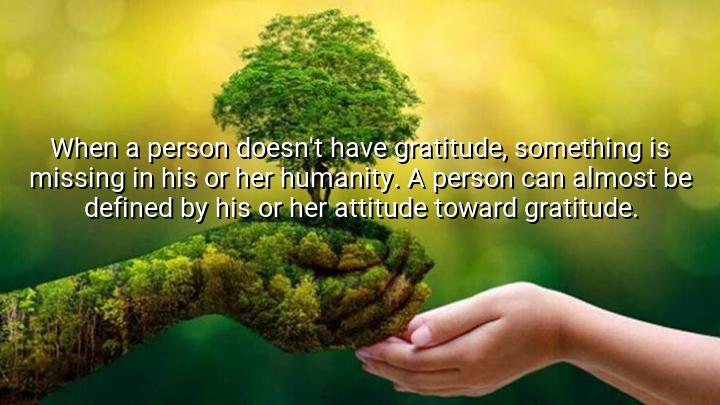




The quote "When a person doesn't have gratitude, something is missing in his or her humanity..." by Elie Wiesel speaks to the profound role that gratitude plays in shaping our human character and moral compass. Wiesel, a Holocaust survivor, author, and Nobel Peace Prize laureate, emphasizes that gratitude is not merely a polite gesture but a fundamental aspect of what makes us fully human. Without it, a vital part of our empathy, humility, and connection to others is absent.
By stating that a person can almost be defined by their attitude toward gratitude, Wiesel highlights how this quality reflects a person's values and perspective on life. Gratitude involves recognizing and appreciating the goodness in our lives, even amid hardship. It shapes how we interact with others, how we cope with challenges, and how we find meaning and purpose. In this way, gratitude is both a personal and social virtue that enriches our humanity.
The origin of this quote is deeply intertwined with Wiesel’s life experiences and his work as a witness to human suffering and resilience. Having endured the horrors of the Holocaust, Wiesel often spoke about the importance of remembering, appreciating life, and fostering compassion. His reflections on gratitude are rooted in the understanding that acknowledging what we have, especially after immense loss, is essential for healing and moral growth.
Ultimately, Wiesel’s words serve as a powerful reminder that gratitude is more than an emotion—it is a defining attitude that influences how we live and relate to the world. It calls on us to cultivate thankfulness as a way to preserve our humanity, nurture our spirit, and foster deeper connections in an often challenging and complex world.

AAdministratorAdministrator
Welcome, honored guests. Please leave a comment, we will respond soon