

What happened in the past that was painful has a great deal to do with what we are today, but revisiting this painful past can contribute little or nothing to what we need to do now.
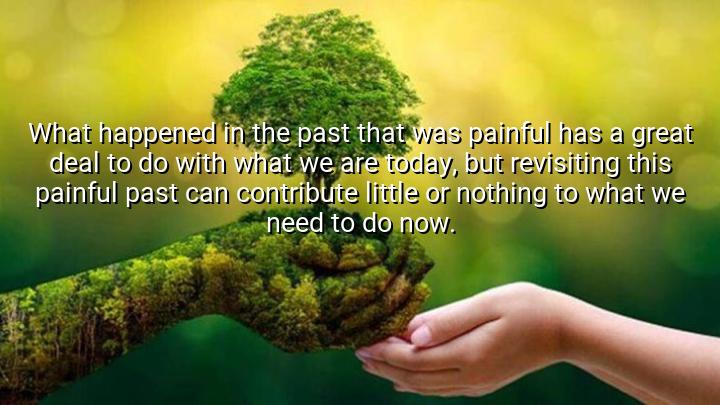




The quote "What happened in the past that was painful has a great deal to do with what we are today, but revisiting this painful past can contribute little or nothing to what we need to do now" by William Glasser reflects on the importance of understanding the past but cautions against dwelling on it. Glasser acknowledges that painful experiences from the past shape who we are, but he suggests that continually revisiting these moments of pain does not necessarily help us move forward or address the challenges of the present.
Glasser's quote emphasizes the idea of moving forward rather than being trapped in past trauma or difficulties. While the past certainly influences our current state, revisiting it over and over can prevent us from focusing on what is necessary in the present. The message is about finding a balance between acknowledging past pain and not allowing it to paralyze or hinder our growth.
By encouraging a focus on the present, Glasser advocates for a forward-thinking mindset. This reflects his broader philosophy of choice theory, which posits that our current actions are a result of the choices we make rather than our past experiences. He suggests that while we cannot erase past pain, we have the power to shape our present and future by focusing on what we can do now.
In essence, the quote encourages a shift from victimhood to agency. Rather than being consumed by past painful events, it urges us to focus on solutions and actions that will enable us to move forward and build a better future.

AAdministratorAdministrator
Welcome, honored guests. Please leave a comment, we will respond soon