

Caring for but never trying to own may be a further way to define friendship.
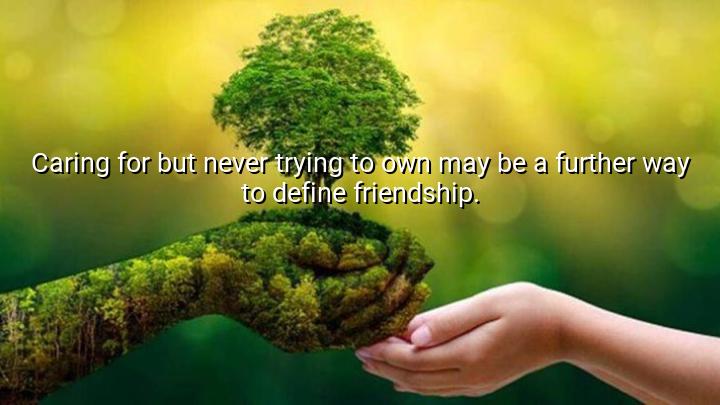




In this quote, William Glasser reflects on the nature of friendship, emphasizing that true friendship involves caring for others without trying to own or control them. He suggests that friendship is based on a mutual respect for one another’s independence and autonomy, where each person values the other’s well-being without imposing expectations or demands. The idea of caring without ownership challenges the notion that relationships must involve possessiveness or control in order to be meaningful.
Glasser’s perspective highlights a deeper, more mature form of friendship, where the connection is rooted in selflessness and respect. By stating that friendship is about caring but not owning, he suggests that healthy relationships allow for personal growth and freedom, where both individuals can maintain their own identities while still being deeply connected. This kind of friendship is about offering support and love without trying to dominate or restrict the other person’s life.
The origin of this view likely stems from Glasser’s broader work in psychology, particularly his development of Choice Theory, which emphasizes personal freedom and responsibility in relationships. Glasser believed that healthy relationships are those where each individual has the freedom to make their own choices, free from coercion or control. This idea of non-possessive friendship aligns with his psychological principles about how people can create fulfilling, autonomous lives through mutual respect and understanding.
Ultimately, Glasser’s quote challenges the traditional ideas of friendship that often involve dependency or possessiveness. Instead, it offers a vision of friendship based on mutual respect, freedom, and care, where individuals can support each other without trying to own or control one another. This reflects a more balanced and respectful approach to relationships that values autonomy while fostering deep emotional connections.

AAdministratorAdministrator
Welcome, honored guests. Please leave a comment, we will respond soon