

We've seen the worst that human beings are capable of. We've seen what happens when leaders abandon common decency in favor of rage and hate. Through the lens of history, the Holocaust happened yesterday, the civil rights movement was this morning, so we are not as out of the woods as we might have thought.
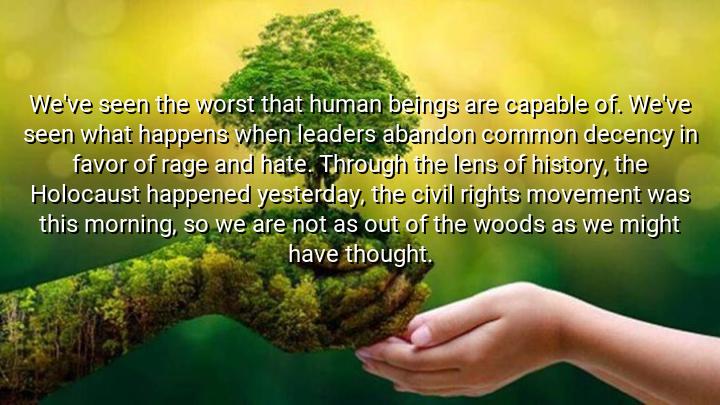




Max Joseph’s quote, "We've seen the worst that human beings are capable of. We've seen what happens when leaders abandon common decency in favor of rage and hate. Through the lens of history, the Holocaust happened yesterday, the civil rights movement was this morning, so we are not as out of the woods as we might have thought," reflects a sobering recognition of humanity’s capacity for cruelty and the ongoing relevance of historical struggles. Joseph emphasizes that events like the Holocaust and the civil rights movement are not distant, isolated moments in the past, but part of a continuous thread of human history that still shapes present-day issues. He suggests that the horrors of history can still resurface if we are not vigilant in upholding decency and fighting against hate and intolerance.
Joseph’s use of "through the lens of history" underscores that historical events are not just things of the past, but ongoing lessons that need to be acknowledged in the present. The Holocaust and the civil rights movement, though separated by time, are reminders of the consequences of leaders who abandon common ethical standards in favor of harmful ideologies. He warns that the patterns of rage and hate that led to these atrocities are not as far behind us as we might think, and complacency can allow such forces to regain influence.
The origin of the quote comes from Joseph’s reflections on current social and political challenges. As a filmmaker and advocate for social justice, he is keenly aware of how history can repeat itself if people are not vigilant. By referencing the Holocaust and the civil rights movement, he draws attention to the ongoing struggles for equality and justice, and how easily society can slip back into patterns of discrimination and violence if moral leadership is absent.
In essence, Joseph’s quote is a call to action, reminding us that we cannot afford to overlook the lessons of history. The past is not as distant as it might seem, and we are still grappling with the consequences of the hate and rage that fueled past atrocities. By recognizing this, we are reminded to continue the fight for decency, equality, and justice to ensure that we do not repeat the mistakes of the past.

AAdministratorAdministrator
Welcome, honored guests. Please leave a comment, we will respond soon