

I often wonder if I should adopt a cause to call my own or start tweeting inspirational messages. And when tragedy strikes and the world takes to social media, is it now my responsibility to respond with #RIPs and #prayfors?
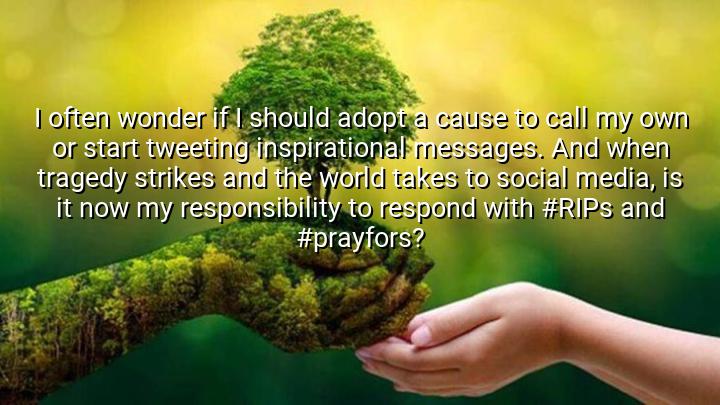




The quote, "I often wonder if I should adopt a cause to call my own or start tweeting inspirational messages. And when tragedy strikes and the world takes to social media, is it now my responsibility to respond with #RIPs and #prayfors?" by Max Joseph, reflects his internal conflict about the pressure to conform to social media expectations. Joseph questions whether he should publicly align with a particular cause or start sharing inspirational messages in the wake of global events. The reference to responding with hashtags like #RIPs and #prayfors points to the trend of using social media as a platform for expressing sympathy or solidarity during tragic events, but he questions the sincerity of such actions.
In this context, Joseph is critiquing the performative nature of social media activism. He wonders if responding to tragedies with hashtags is enough to demonstrate empathy or whether it has become a social expectation rather than a genuine expression of care. The quote touches on the larger issue of authenticity in online spaces, where individuals often feel compelled to follow trends or societal norms without deeply considering their personal connection to the events or causes being discussed.
The origin of this quote comes from Joseph’s experience as a filmmaker and social media figure, where he’s observed the rise of social media as a platform for public expression. Known for his work on the show Catfish, Joseph often explores themes of identity and authenticity, and his quote reflects his doubts about the effectiveness and sincerity of hashtag activism in the digital age.
In essence, Joseph’s quote raises important questions about responsibility, authenticity, and action in the era of social media. It challenges the notion that simply sharing an inspirational message or participating in online trends is enough to make a meaningful impact. The quote invites reflection on how individuals should engage with social causes and whether true solidarity requires more than just surface-level expressions on social media.

AAdministratorAdministrator
Welcome, honored guests. Please leave a comment, we will respond soon