

We've begun to raise daughters more like sons... but few have the courage to raise our sons more like our daughters.
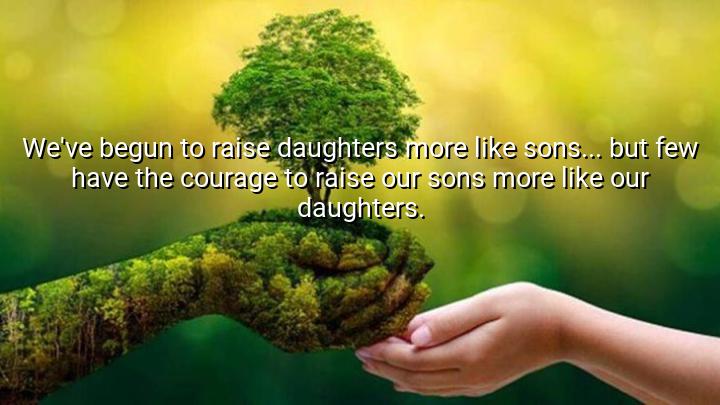




The quote "We've begun to raise daughters more like sons... but few have the courage to raise our sons more like our daughters" by Gloria Steinem speaks to the evolving gender roles and expectations in society. Steinem, a prominent feminist, points out that daughters are increasingly encouraged to adopt traits traditionally associated with masculinity, such as ambition, assertiveness, and independence. This reflects a shift towards gender equality, where women are encouraged to break free from limiting stereotypes.
However, Steinem's quote also highlights a lingering societal resistance when it comes to raising sons with qualities traditionally linked to femininity, such as emotional expression, vulnerability, and nurturing. This reluctance is tied to the ongoing gender norms that associate masculinity with power and strength, while femininity is often seen as weaker or less valuable. Steinem suggests that there is a societal fear or discomfort in encouraging sons to embrace traits that are typically seen as "soft" or "caring."
By stating that "few have the courage," Steinem underscores that while progress has been made in allowing daughters more freedom to pursue non-traditional roles, there is still resistance to allowing sons to explore the emotional and compassionate aspects of life. This imbalance in how gender is perceived and taught to children highlights the deep-rooted gender inequality that still exists, even as society moves towards greater gender equity.
Ultimately, the quote serves as a call to action for a more balanced approach to raising children, encouraging both girls and boys to be free from restrictive stereotypes and to embrace a fuller range of human experiences, regardless of gender. Steinem’s words challenge us to rethink the way we socialize the next generation, aiming for a future where all children are encouraged to explore both masculine and feminine qualities without fear of judgment.

AAdministratorAdministrator
Welcome, honored guests. Please leave a comment, we will respond soon