

We should weep for men at their birth, not at their death.
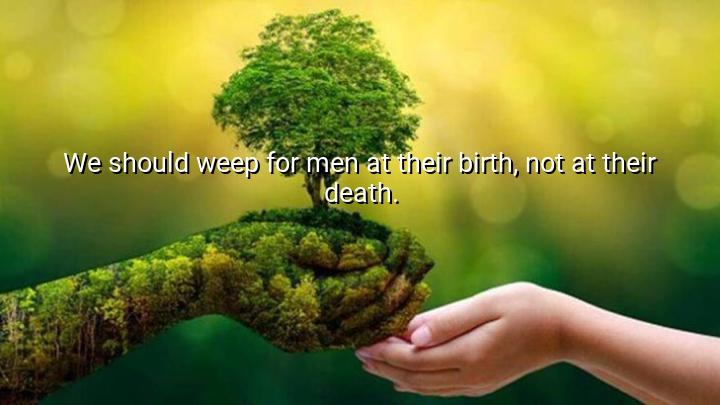




Montesquieu’s quote, "We should weep for men at their birth, not at their death," expresses a philosophical view on the nature of life and the challenges humans face throughout their existence. Montesquieu, a French political thinker, believed that life is full of struggles, and that being born into the world is the start of a journey fraught with challenges, suffering, and inevitable death. The quote suggests that the moment of birth marks the beginning of an individual’s struggles, and thus, it is more fitting to mourn the hardships they will face in life, rather than their ultimate end.
The idea behind the quote is that death, while a significant event, is the final release from the burdens and difficulties of life. Rather than fearing or mourning death, Montesquieu emphasizes the importance of recognizing the suffering and hardships that people must endure from the moment they are born. By weeping for a person at their birth, he suggests that we acknowledge the inherent suffering of human existence and the challenges that are to come.
Montesquieu's quote also speaks to a deeper view of humanity—that life is an ongoing process of growth, learning, and sometimes suffering, with death ultimately offering rest from these struggles. In his time, life expectancy was much shorter, and death was often seen as a more natural part of life, while the birth of a person represented the beginning of their journey into a complex and often painful world.
In essence, the quote challenges conventional ideas about death and life, suggesting that instead of fearing the inevitable end, we should recognize and reflect on the difficulties and sacrifices people face from the start of their lives. It invites a more philosophical and empathetic view of existence, where the true sorrow lies in the challenges of life rather than in its inevitable end.

AAdministratorAdministrator
Welcome, honored guests. Please leave a comment, we will respond soon