

Do you think that God will punish them for not practicing a religion which he did not reveal to them?
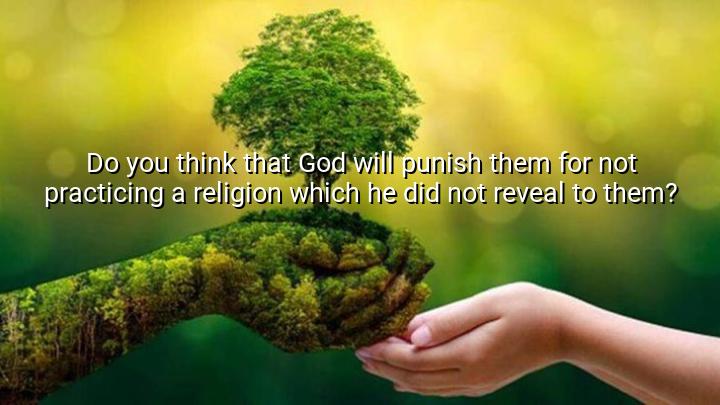




In this quote, Montesquieu, an influential 18th-century French philosopher, raises a thought-provoking question about the nature of religion and divine justice. He challenges the assumption that people should be punished for not following a particular religion, especially when it was not explicitly revealed to them. The quote underscores his belief in the importance of reason and humanity when considering religious faith, suggesting that it may be unjust to hold individuals accountable for something they had no direct access to or knowledge of.
Montesquieu’s words are rooted in his broader philosophical ideas about freedom of conscience and the importance of tolerance in society. He was critical of rigid, dogmatic religious systems and their potential to cause harm by enforcing beliefs that might not be universal or inherently true. This quote reflects his enlightenment ideals, which emphasized the need for individuals to have the freedom to choose their beliefs without fear of punishment or oppression from religious authorities or the state.
By questioning whether God would punish those who did not follow a religion that was not revealed to them, Montesquieu is highlighting a moral dilemma: can it be just to hold someone accountable for not adhering to a faith they never encountered or understood? This inquiry reflects his broader skepticism about the way religion and divine will were often interpreted by organized institutions, which he saw as sometimes distorting spiritual principles for their own agendas.
Ultimately, Montesquieu’s quote invites reflection on the nature of divine justice and religious freedom, suggesting that God may not be as concerned with strict adherence to a single faith as much as with the moral integrity and goodness of individuals. His question challenges us to think more deeply about tolerance, compassion, and the ways in which religious beliefs should be practiced or enforced.

AAdministratorAdministrator
Welcome, honored guests. Please leave a comment, we will respond soon