

We ourselves can die with comfort and even with joy if we know that death is but a passport to blessedness, that this intellect, freed from all material chains, shall rise and shine.
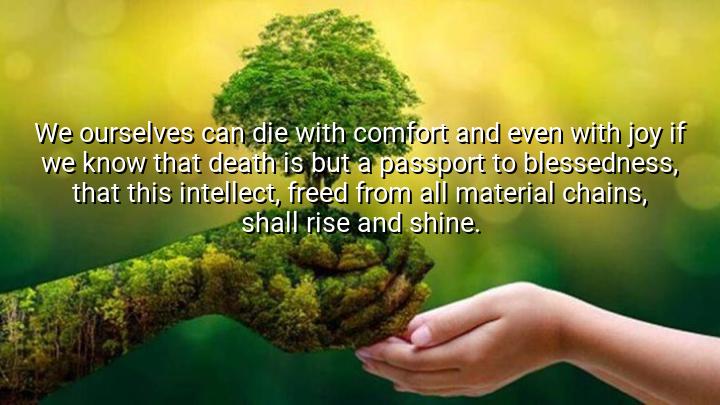




The quote "We ourselves can die with comfort and even with joy if we know that death is but a passport to blessedness, that this intellect, freed from all material chains, shall rise and shine" by Matthew Simpson reflects a hopeful and spiritual perspective on death. Simpson suggests that death, rather than being a fearful or painful end, can be seen as a transition to something greater, a passage to blessedness. By framing death as a means of liberation—freeing the intellect and spirit from the constraints of the material world—he offers a vision of death that brings comfort and even joy.
The origin of this quote is rooted in Simpson’s religious and spiritual beliefs, particularly his role as a Methodist bishop in the 19th century. Simpson was known for his advocacy of Christian faith and the hope of eternal life. In his writings and speeches, he often emphasized the hope that death could be understood as part of God's plan, leading to a better existence in the afterlife. This quote is an expression of his belief that through faith, death could be viewed not as an end, but as a spiritual release into a higher state.
Simpson’s words also emphasize the idea of freedom and transcendence. The reference to the intellect being "freed from all material chains" suggests that the burdens of physical existence, such as pain, aging, or illness, are removed in death. The image of the intellect rising and shining symbolizes a form of spiritual awakening or enlightenment that follows physical death, suggesting that death is not to be feared, but embraced as the fulfillment of a higher purpose.
In essence, this quote encourages a view of death that is aligned with faith, hope, and the promise of eternal life. By seeing death as a passport to something greater, Simpson invites individuals to approach their mortality with peace, knowing that their intellect and spirit will ultimately be freed and elevated. This perspective can offer comfort to those facing the end of life, providing a sense of purpose and tranquility in the face of death.

AAdministratorAdministrator
Welcome, honored guests. Please leave a comment, we will respond soon