

We now live in a world where the only thing to have is success, but failure is marvelous. It's fertiliser, it's like living fertiliser, because you're forced on yourself.
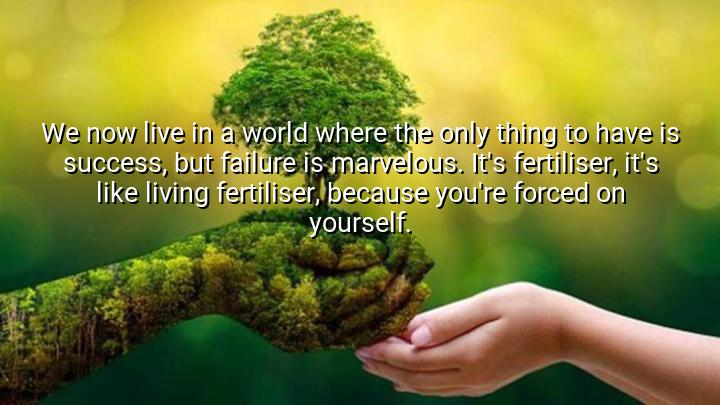




The quote by Rupert Everett explores the paradoxical relationship between success and failure in modern society. While he acknowledges that today’s world values success as the ultimate goal, he celebrates failure as something truly marvelous. Everett metaphorically describes failure as fertiliser—a vital element that enriches growth and transformation. This suggests that failure, rather than being merely a setback, is a crucial catalyst for personal development and self-discovery.
Everett’s words emphasize how failure forces individuals to confront themselves, leading to deeper reflection and growth. Unlike success, which may sometimes foster complacency, failure demands resilience and introspection. By calling failure “living fertiliser,” he highlights its dynamic and life-giving potential, essential for pushing people beyond their limits and inspiring change.
The origin of this quote comes from Everett’s career as an actor and writer, where he has experienced both the highs of acclaim and the lows of disappointment. His candid perspective encourages embracing failure as a necessary and enriching part of the human experience, challenging the stigma often associated with it.
In summary, Rupert Everett’s quote reframes failure as a powerful and nourishing force, essential for growth and self-improvement. It invites us to appreciate failure not as a defeat but as a transformative process that ultimately leads to greater success and authenticity.

AAdministratorAdministrator
Welcome, honored guests. Please leave a comment, we will respond soon