

We have lots of evidence that putting investments in early childhood education, even evidence from very hard-nosed economists, is one of the very best investments that the society can possibly make. And yet we still don't have public support for things like preschools.
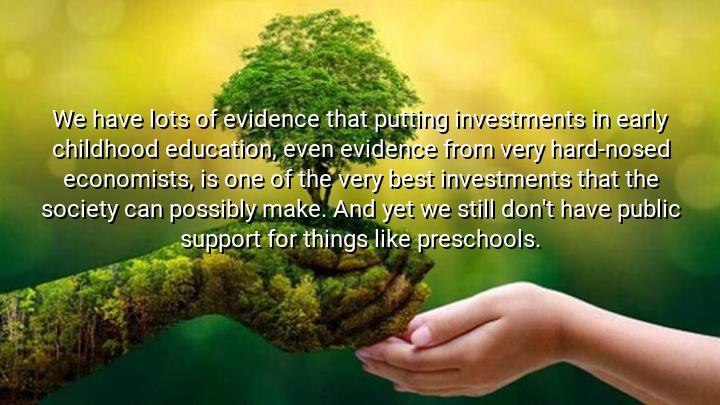




The quote “We have lots of evidence that putting investments in early childhood education, even evidence from very hard-nosed economists, is one of the very best investments that the society can possibly make. And yet we still don't have public support for things like preschools.” is attributed to Alison Gopnik, the American psychologist and professor of developmental psychology. At its core, the statement stresses the overwhelming value of early childhood education as a societal investment. Gopnik highlights that research consistently shows that funding preschools and early learning programs has profound long-term benefits, not only for children but for society as a whole.
The origin of this idea comes from Gopnik’s extensive work in developmental psychology and cognitive science, where she has studied how young children learn and explore the world. Drawing also on economic research, she references findings from economists like James Heckman, who demonstrated that investments in early education yield higher returns than almost any other form of public spending. Her frustration, expressed in the quote, lies in the gap between strong evidence and weak public policy support for preschools and similar programs.
The meaning of the quote underscores a paradox: while society recognizes the importance of education in general, it often undervalues the most critical stage—early childhood. Investments at this stage improve lifelong outcomes in health, employment, and social well-being, yet public support often lags behind due to political or cultural priorities. Gopnik’s words challenge policymakers and the public to recognize that early education is not charity but a strategic, long-term investment.
Ultimately, Gopnik’s reflection is both scientific and practical. It calls for a shift in how societies think about education policy, urging greater emphasis on the foundational years of a child’s life. By investing in preschools and early learning, nations can foster healthier, more capable, and more productive citizens. Her words remind us that the future strength of society depends on how seriously we take the task of nurturing its youngest members.

AAdministratorAdministrator
Welcome, honored guests. Please leave a comment, we will respond soon