

We failed, but in the good providence of God apparent failure often proves a blessing.
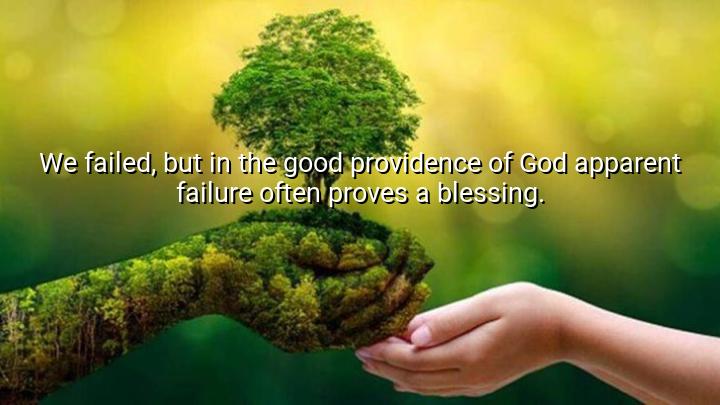




The quote "We failed, but in the good providence of God apparent failure often proves a blessing" by Robert E. Lee reflects his deeply held belief in faith and the divine purpose behind life's struggles. Lee, a prominent Confederate general during the American Civil War, expresses a sense of acceptance and hope even in the face of defeat. His acknowledgment of failure here is not a resignation but rather a recognition that setbacks can lead to positive outcomes, often in ways that are not immediately apparent.
The origin of this quote comes from Lee's reflections after the Confederate defeat at the Battle of Gettysburg in 1863. This was a significant loss for the Confederacy, and Lee, as its leader, was deeply impacted by the outcome. Despite this, his statement reflects his spiritual perspective, that even in apparent failure, there can be unseen blessings or lessons to be learned. His faith in God's will gave him the strength to find meaning and purpose even in the darkest moments of his life and military career.
Lee's words also convey a message of resilience and trust in something larger than oneself. By attributing failure to God's providence, he implies that setbacks are part of a larger plan, one that may lead to eventual growth or redemption. This mindset helped him to endure the personal and public challenges he faced, encouraging others to see failure not as an end but as a stepping stone toward something greater.
In a broader sense, the quote serves as a reminder of the importance of faith in difficult times. Lee's ability to find hope in failure speaks to a deeper belief in divine guidance and the idea that setbacks often lead to unexpected blessings or lessons. This message resonates beyond the historical context of the Civil War, offering a spiritual perspective on how to handle adversity and challenges in life.

AAdministratorAdministrator
Welcome, honored guests. Please leave a comment, we will respond soon