

We are now heading down a centuries-long path toward increasing the productivity of our natural capital - the resource systems upon which we depend to live - instead of our human capital.
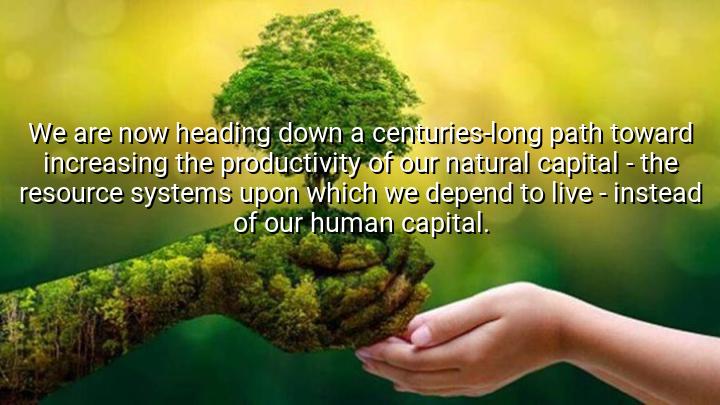




The quote by Paul Hawken, "We are now heading down a centuries-long path toward increasing the productivity of our natural capital—the resource systems upon which we depend to live—instead of our human capital," emphasizes the urgent need to prioritize the sustainability of the planet’s ecosystems. Hawken, an environmentalist, entrepreneur, and author, highlights that society has long focused on developing human capital—skills, knowledge, and labor—but must now shift attention to maintaining and enhancing natural capital, the forests, water, soil, and biodiversity that sustain life.
By distinguishing between natural capital and human capital, Hawken underscores that economic and social progress is fundamentally dependent on the health of ecosystems. The quote suggests that human prosperity is not separate from environmental sustainability; rather, our resource systems are the foundation of all human activity. Ignoring this connection could lead to resource depletion, ecological imbalance, and long-term societal risks.
The origin of this quote comes from Hawken’s work on sustainable business practices and environmental advocacy, particularly in books like The Ecology of Commerce and Drawdown. He has consistently argued for strategies that integrate ecological wisdom with economic development, advocating for policies and innovations that enhance the productivity and resilience of natural systems. Hawken’s perspective reflects a forward-looking approach to environmental stewardship and sustainable growth.
Ultimately, Hawken’s quote serves as both a warning and a guiding principle. It calls for a shift in focus from exploiting human capital alone to investing in and preserving natural capital. By doing so, society can ensure long-term well-being, ecological stability, and the continued availability of essential resources that underpin life on Earth.

AAdministratorAdministrator
Welcome, honored guests. Please leave a comment, we will respond soon