

The responses that environmentalists evoke - fear, anxiety, numbness, despair - are not helpful, even if they are understandable. It should be fascinating, even enthralling, to be in the milieu of environmental change.
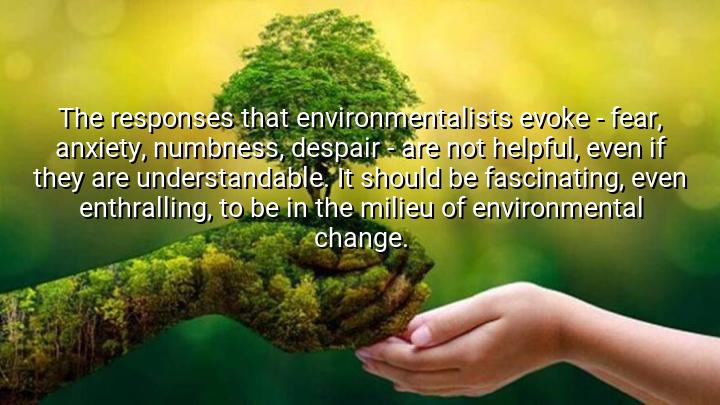




In this quote, Paul Hawken critiques the emotional responses often triggered by environmentalists when discussing environmental issues, such as fear, anxiety, numbness, and despair. While he acknowledges that these emotions are understandable in the face of daunting environmental challenges, he suggests that they are ultimately unhelpful. Hawken argues that framing environmental change in negative terms can create a sense of paralysis, preventing meaningful action and engagement with the issue.
Hawken emphasizes that environmental change should be seen not as a source of dread, but as an opportunity to engage in something fascinating and even enthralling. He suggests that instead of focusing on the emotional weight of the crisis, it’s more productive to view environmental action as a dynamic and exciting field where individuals can actively participate in shaping a more sustainable future. This shift in perspective can inspire hope and action, motivating people to work towards solutions with enthusiasm rather than fear.
The quote also speaks to the power of positive engagement in fostering long-term change. By framing environmentalism in a more inspiring light, Hawken encourages people to embrace the challenges ahead with a sense of curiosity and wonder. This approach contrasts with the common narrative that often portrays environmental problems as insurmountable, urging a mindset shift towards proactive and creative solutions.
Ultimately, Paul Hawken calls for a more empowered and optimistic approach to environmentalism. Instead of focusing solely on the negative aspects of the crisis, he advocates for a vision of environmental change that is not only essential but also exciting and motivating. By fostering a sense of intrigue and excitement, he believes that people will be more likely to engage in meaningful, sustainable actions.

AAdministratorAdministrator
Welcome, honored guests. Please leave a comment, we will respond soon