

We are called to care for those sickened by pollution, house those displaced by environmental calamities, and heal the spirits of those - especially our youth - who are disheartened by a world where human survival is now in question.
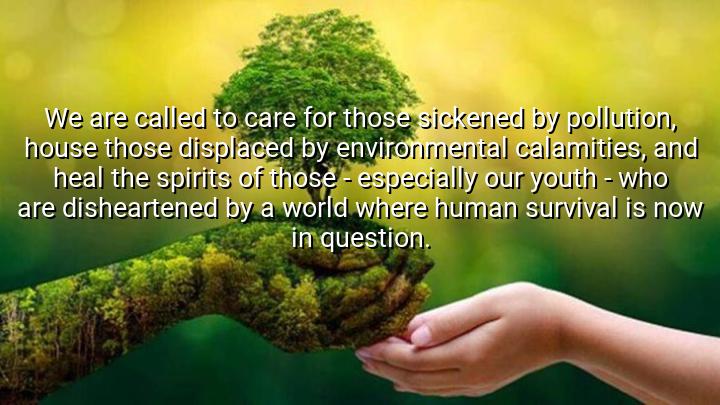




The quote by Blase J. Cupich emphasizes the moral and ethical responsibility to respond to the consequences of environmental degradation. He calls attention to the need to care for those sickened by pollution, highlighting the direct impact of environmental harm on human health. This reflects a broader concern for environmental justice, where vulnerable populations often bear the greatest burden of ecological damage.
Cupich also stresses the importance of providing shelter for those displaced by environmental calamities. This points to the growing issue of climate-induced migration, where natural disasters, rising sea levels, and extreme weather events force communities to leave their homes. His statement frames environmental challenges as not only ecological but also deeply human and social issues requiring compassionate intervention.
The quote further underscores the need to heal the spirits of those, particularly youth, who are anxious about the future of the planet. By acknowledging the emotional and psychological impact of environmental crises, Cupich highlights the intersection of climate change, mental health, and moral responsibility. He encourages society to nurture hope and resilience in younger generations who are most concerned about the long-term survival of humanity.
The origin of this perspective comes from Cupich’s role as a religious leader and advocate for social and environmental ethics. As a Catholic bishop and public figure, he often speaks about the moral imperatives of stewardship, justice, and care for creation. This quote reflects his belief that addressing environmental issues requires not only technical solutions but also a compassionate, values-driven response that supports both people and the planet.

AAdministratorAdministrator
Welcome, honored guests. Please leave a comment, we will respond soon