

Watching a peaceful death of a human being reminds us of a falling star; one of a million lights in a vast sky that flares up for a brief moment only to disappear into the endless night forever.
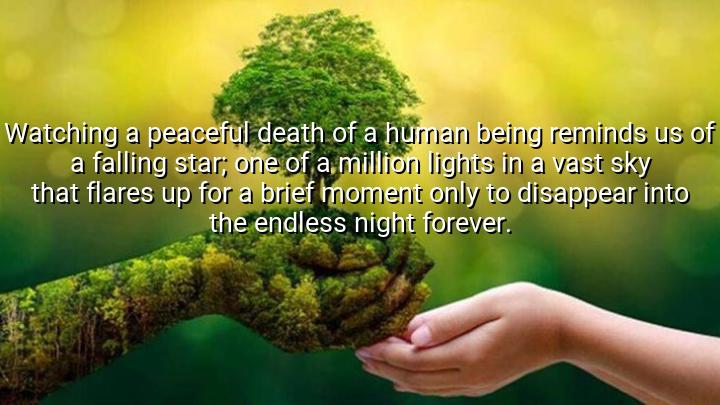




Elisabeth Kubler-Ross's quote compares human death to a falling star, emphasizing the transience of life. Just as a falling star appears momentarily in the vast night sky, a human life flares briefly before disappearing forever. This imagery illustrates the fragility and fleeting nature of existence. Life, much like a falling star, seems bright and significant in the moment, yet it is part of something much larger and eternal.
Kubler-Ross, a renowned psychiatrist and expert on death and dying, explored the emotional stages that people go through when facing mortality. She famously developed the Kubler-Ross model, which identifies five stages of grief: denial, anger, bargaining, depression, and acceptance. Her work highlights the importance of understanding death not as an end, but as a natural part of the human experience, one that can offer profound reflection and meaning.
The metaphor of a falling star also reflects the idea that each life, no matter how brief or seemingly insignificant, has its own unique brightness in the universe. While death may be inevitable, it is important to appreciate the light that a person brings to the world during their lifetime. Kubler-Ross's words invite us to cherish life's impermanence, reminding us that even though death may seem final, it is simply another part of the cosmic cycle.
The origin of the quote comes from Kubler-Ross’s exploration of the human experience and our relationship with mortality. By drawing this parallel, she encourages us to contemplate death not with fear or sorrow, but with a sense of acceptance and peace. In the end, the falling star’s brief, shining existence is a beautiful reminder that our lives, too, can have meaningful impacts, even if they are short-lived.

AAdministratorAdministrator
Welcome, honored guests. Please leave a comment, we will respond soon