

War remains the decisive human failure.
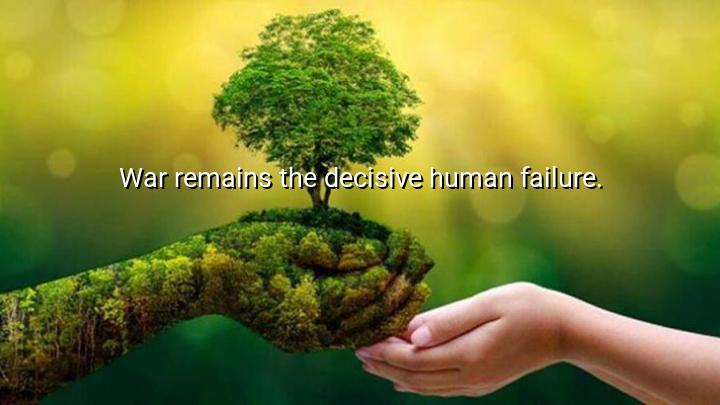




The quote by John Kenneth Galbraith, "War remains the decisive human failure," speaks to the devastating impact of war on humanity and its inherent role as a failure of humanity itself. Galbraith suggests that, regardless of the reasons or justifications for war, it represents the ultimate breakdown in human cooperation, diplomacy, and reason. War, in his view, is the result of a failure to resolve disputes peacefully, and it underscores a collective inability to prevent large-scale destruction and suffering.
Galbraith’s statement highlights the tragic nature of war, which not only brings physical and emotional harm to those directly involved, but also disrupts entire societies and economies. Even if a war ends with one side victorious, the destruction and loss experienced are irreparable, making it a failure for all of humanity. The quote suggests that the existence of war indicates a deep flaw in the human condition—the inability to settle differences without resorting to violence and conflict.
The origin of this quote lies in John Kenneth Galbraith's career as an economist and public intellectual, where he often addressed issues related to politics, economics, and social policy. Known for his critical views on militarism and its effects on global peace, Galbraith’s work challenged the notion that war could ever be a necessary or positive force. This quote reflects his broader belief that the resources spent on war could be better used for human progress and development.
Ultimately, Galbraith’s quote serves as a powerful critique of war and its consequences. It urges a reevaluation of how societies address conflict, advocating for peace and cooperation as alternatives to violence. The idea that war is the "decisive human failure" calls on individuals and nations to work towards finding solutions to global issues that do not involve the destruction and loss associated with war.

AAdministratorAdministrator
Welcome, honored guests. Please leave a comment, we will respond soon