

Unrest of spirit is a mark of life.
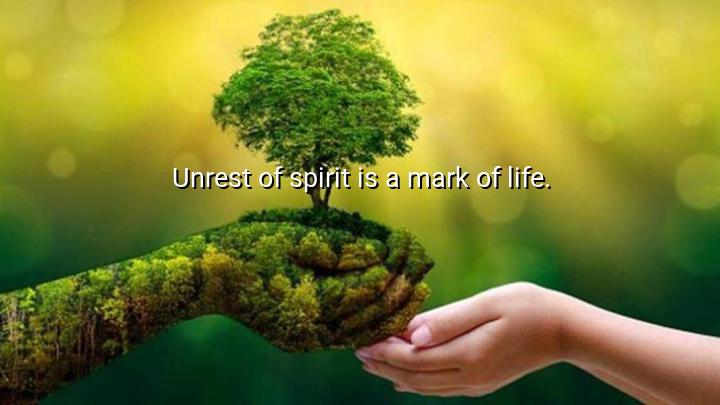




In this quote, Karl A. Menninger, a prominent American psychiatrist, suggests that the unrest of spirit—a feeling of inner turmoil or discontent—is an inherent part of life. Menninger argues that this feeling is not necessarily a sign of mental illness or dysfunction but a natural aspect of the human experience. Unrest can stem from a variety of sources, such as unmet desires, personal growth, or the tension between our aspirations and realities. Rather than being something to avoid or suppress, Menninger implies that such discomfort is part of our ongoing search for meaning, purpose, and self-realization.
The concept of unrest as a mark of life aligns with Menninger’s broader views on psychology and mental health. He believed that mental health does not equate to a state of permanent peace or harmony, but rather involves managing and understanding the natural ups and downs of life. By framing unrest as a normal part of living, Menninger encourages us to embrace it, rather than see it as something that needs to be fixed. It is through struggle and discontent that individuals often find deeper self-awareness and growth.
The origin of this quote is tied to Menninger's work as a psychiatrist and his belief in the complexity of the human psyche. Throughout his career, Menninger stressed that psychological well-being is not about avoiding challenges, but about how we face and navigate them. His writings, particularly in books like The Human Mind and Man Against Himself, reflect his view that inner conflict is an essential part of the human condition, serving as a catalyst for personal evolution. Unrest is seen as a sign that we are alive and actively engaging with the world around us.
Ultimately, Menninger's quote serves as a reminder that discomfort and discontent are not necessarily negative forces. Instead, they can be signals of growth, change, and the search for meaning. By embracing unrest and understanding it as a natural part of life, we can approach it with acceptance and curiosity, using it as an opportunity for self-reflection and deeper connection with ourselves and the world.

AAdministratorAdministrator
Welcome, honored guests. Please leave a comment, we will respond soon